Wheelchair Ramps vs. Stair Lifts: Which Solution Is Right for Your Home?
Wheelchair Ramps vs. Stair Lifts: Which Solution Is Right for Your Home?

Wheelchair Ramps vs. Stair Lifts: Which Solution Is Right for Your Home?
Wheelchair Ramps vs. Stair Lifts: Which Solution Is Right for Your Home?
Wheelchair Ramps vs. Stair Lifts: Which Solution Is Right for Your Home?
You're stuck. Literally.
The stairs at your home's entrance have transformed from a minor inconvenience into a serious barrier. Maybe you're using a wheelchair or walker. Maybe balance has become an issue. Or perhaps you're planning ahead for an aging parent who's moving in.
Whatever the situation, you know something needs to change. But as you research solutions, you're faced with a decision: Should you install a wheelchair ramp or a stair lift?
Both solutions can restore access to your home, but they work very differently. Choosing the wrong one can mean wasted money, continued frustration, and safety risks.
Here's how to make the right choice for your situation.
Understanding the Problem: Why Stairs Become Barriers
Before we compare solutions, let's acknowledge what's really at stake.
Externally, stairs prevent you from entering or exiting your home independently. They may force you to depend on others for help, limit your ability to leave home when you want, or even trap you inside during emergencies.
Internally, this creates frustration, anxiety, and a loss of dignity. Every time you face those stairs, you're reminded of limitations you didn't used to have. For family members, there's guilt and worry—what happens if your loved one falls? What if they can't get out in an emergency?
Philosophically, it's simply wrong that the entrance to your own home should prevent you from living independently. Your home should support your life, not limit it.
According to the National Safety Council, falls are the leading cause of injury for older adults, and stairs are a primary culprit.
Both wheelchair ramps and stair lifts address this problem—but in different ways.
Wheelchair Ramps: Permanent, Accessible, Weather-Proof
What Is a Wheelchair Ramp?
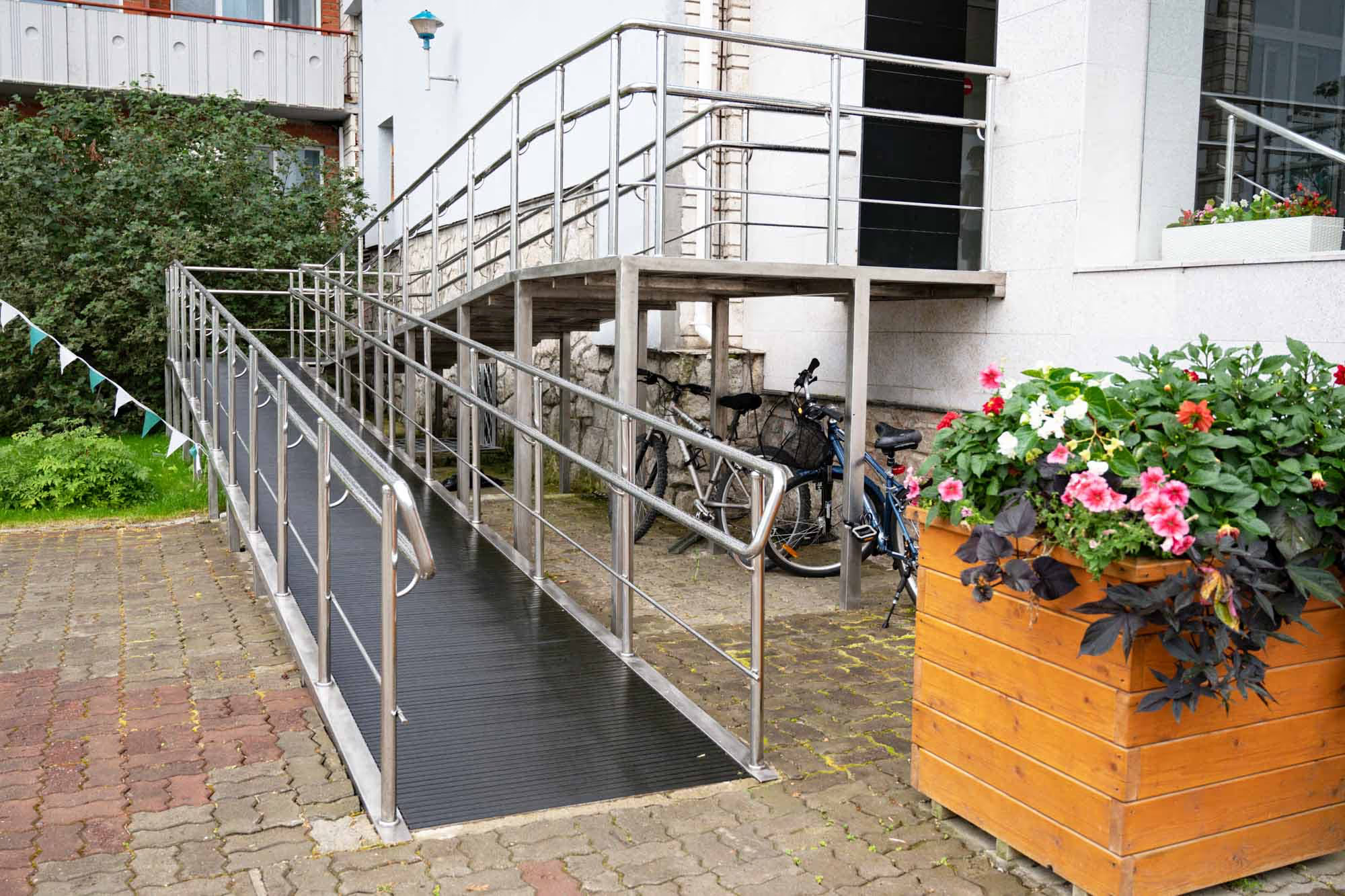
A wheelchair ramp is an inclined surface that allows people using wheelchairs, walkers, scooters, or who have difficulty with stairs to access different levels without steps. Properly designed ramps follow ADA guidelines, typically using a 1:12 slope ratio (one inch of vertical rise for every 12 inches of horizontal length).
Who Benefits Most from Wheelchair Ramps?
Ramps are ideal for:
- Wheelchair users who need consistent, reliable access
- Walker and rollator users who can't navigate stairs safely
- Mobility scooter users who need a smooth, gradual incline
- Caregivers pushing wheelchairs or assisting loved ones
- Families with strollers or anyone moving heavy items in and out regularly
- People who need emergency evacuation routes (you can't evacuate quickly on a stair lift)
Advantages of Wheelchair Ramps
Always accessible: Ramps work 24/7 with no mechanical parts, power requirements, or moving components that can fail. Rain, snow, or power outage—your ramp still works.
Multiple users: Everyone in the household can use a ramp simultaneously. If you have multiple family members with mobility needs, a ramp serves everyone.
Emergency safety: In an emergency, you can evacuate quickly via a ramp. Stair lifts require time to operate and can only help one person at a time.
Equipment compatibility: Ramps accommodate wheelchairs, walkers, scooters, canes, crutches, strollers, and hand trucks without modification.
Long-term durability: Quality ramps built from weather-resistant materials last decades with minimal maintenance. Minnesota winters don't stop a well-built ramp.
Property value: Ramps can enhance property value, especially as aging-in-place modifications become more desirable to buyers.
Disadvantages of Wheelchair Ramps
Space requirements: Ramps need considerable length. For every foot of height, you need approximately 12 feet of ramp length (plus landings). A 24-inch rise requires a 24-foot ramp.
Visual impact: Ramps are visible external structures. While we design them to complement your home's architecture, they do change the appearance of your property.
Upfront cost: The initial investment can be substantial, especially for longer ramps. However, there are often funding options available (more on this below).
Not ideal for temporary needs: If you only need accessibility for a few weeks (recovering from surgery, for example), a temporary rental ramp might be more appropriate.
Weather maintenance: In Minnesota, ramps need snow and ice removal to remain safe in winter months.
Learn more about our professional wheelchair ramp installation services.
Stair Lifts: Mechanical, Compact, Indoor/Outdoor Options
What Is a Stair Lift?
A stair lift (also called a chair lift) is a motorized chair that travels along a rail mounted to your staircase. The user sits in the chair, which then glides up or down the stairs safely and comfortably.
Who Benefits Most from Stair Lifts?
Stair lifts work well for:
- People who can transfer in and out of a chair independently or with minimal assistance
- Individuals with limited mobility who struggle with stairs but can still walk short distances
- Homeowners with space constraints where ramps aren't feasible
- Multi-story homes where you need to access upstairs bedrooms or living spaces
- Temporary or progressive mobility issues where needs may change over time
Advantages of Stair Lifts
Minimal space requirements: Stair lifts take up very little floor space. The rail mounts to your staircase or wall, and the chair folds up when not in use.
No exterior impact: For indoor stair lifts, there's no change to your home's exterior appearance. The modification is entirely inside.
Works on curved staircases: Custom stair lifts can navigate curved, spiral, or switchback staircases that would be impossible to ramp.
Faster installation: Stair lifts typically install in a day or two, compared to longer construction times for ramps.
Can be removed or relocated: If you move, many stair lifts can be uninstalled and taken with you or sold to the next homeowner.
Lower initial cost: For short staircases, stair lifts often cost less upfront than building a ramp, though long-term maintenance should be factored in.
Disadvantages of Stair Lifts
Requires transfer ability: You must be able to sit down, stand up, and move into and out of the chair. If transferring is difficult or impossible, stair lifts won't work for you.
One user at a time: Only one person can ride the lift at a time, and the chair must return before another person can use it.
Mechanical dependency: Stair lifts require electricity and regular maintenance. They can break down, and repairs can be costly.
Not wheelchair accessible: You can't ride a stair lift while in a wheelchair. You must transfer from wheelchair to lift, then to wheelchair again at the other end (requiring a wheelchair on each floor).
Emergency limitations: In a power outage, you're trapped unless you have battery backup. In an emergency evacuation, stair lifts are slow.
Ongoing costs: Maintenance, repairs, and eventual replacement add long-term costs beyond the initial installation.
Indoor vs. outdoor considerations: Outdoor stair lifts exist but require additional weatherproofing and maintenance, especially in Minnesota's climate.
Making Your Decision: Key Questions to Ask
1. What mobility equipment do you use?
If you use a wheelchair or mobility scooter full-time, a ramp is almost always the right choice. Stair lifts require you to transfer out of your wheelchair, which defeats the purpose of having one.
If you use a walker or cane, either option could work, but consider whether you can safely sit and stand from a seated position.
If you can walk short distances but struggle with stairs, a stair lift might be perfect for navigating between floors inside your home.
2. Is this for entering your home or moving between floors?
For home entrances, ramps are generally preferred because:
- They work in emergencies
- They accommodate delivery people, guests with mobility issues, and equipment
- They handle Minnesota weather better
For interior staircases between floors, stair lifts make sense if:
- You want to keep upstairs bedrooms/bathrooms
- You don't have space for a first-floor bedroom/bathroom addition
- You can transfer safely
Alternatively, consider relocating bedroom and bathroom to main floor if possible.
3. Is this a permanent or temporary need?
Permanent or progressive conditions (aging, permanent disability, degenerative diseases) usually warrant the investment in a ramp due to long-term reliability and durability.
Temporary needs (recovering from surgery, temporary injury) might be better served by a short-term rental stair lift or temporary modular ramp.
4. What's your budget, and what funding is available?
Both ramps and stair lifts can be funded through:
- Minnesota waivered services for individuals with disabilities (we're a licensed provider)
- VA grants for veterans (both SAH and HISA programs)
- Home equity financing or personal loans
- Insurance (sometimes, depending on medical necessity and policy)
Learn about Minnesota waivered services funding
Explore VA funding options
Review financing solutions
The cost comparison varies significantly based on:
- Height and complexity of stairs
- Length of ramp needed or staircase configuration
- Materials selected
- Indoor vs. outdoor installation
We provide transparent, detailed estimates for both solutions so you can make an informed choice.
5. Do you have space for a ramp?
Measure your available space. A ramp needs approximately 12 feet of length for every foot of height, plus landings.
Example: If your entrance has 3 steps (about 24 inches of rise), you'll need at least a 24-foot ramp plus landing space.
If you don't have this space available, a stair lift might be your only option—or you might consider a platform lift (an elevator-style solution for exterior use).
6. What's your home's configuration?
Single-story ranch homes with exterior stairs usually benefit most from ramps.
Multi-level homes with challenging interior staircases might need a combination: a ramp at the entrance and a stair lift for interior floors.
Split-level homes often present unique challenges. We can assess your specific situation and recommend the best solution.
What About Platform Lifts and Other Options?
Sometimes neither a ramp nor a stair lift is the perfect fit. Other solutions include:
Platform Lifts (Porch Lifts): Vertical lifts that raise and lower a platform for wheelchair users. Great when vertical rise is significant but space for a ramp isn't available.
Home Elevators: For multi-story homes where comprehensive accessibility is needed on all floors.
Threshold Ramps: Small, portable ramps for minor elevation changes (1-2 inches).
Modular/Portable Ramps: Temporary ramp systems that can be installed and removed without permanent modification.
We can help you explore all options and find the right fit for your situation. Contact us for a consultation.
Why Work with Remodel for Life?
We're not salespeople pushing one solution. We're accessibility specialists who want to find the right answer for your specific needs.
When you meet with us:
- We assess your home, your mobility needs, and your goals
- We discuss all viable options (ramps, lifts, other solutions)
- We provide honest recommendations based on safety, functionality, and budget
- We give you transparent pricing with no hidden costs
- We help you explore funding options including waivered services and VA benefits
You get expert guidance, not a sales pitch.
Learn more about our approach: About Remodel for Life
Real Stories: Solutions That Changed Lives
Tom, 68, Stillwater: "After my stroke, stairs were impossible. We didn't have room for a long ramp, so we installed a stair lift. It's been a lifesaver—I can get to my bedroom and bathroom upstairs safely. The crew was professional and patient with all my questions."
The Martinez Family, Oakdale: "Our son uses a wheelchair, and our front entrance had five steps. Remodel for Life built a beautiful ramp that blends with our house. Now he can come and go independently, and we don't worry about emergency access anymore."
Carol, 75, White Bear Lake: "I was torn between a ramp and a lift. The team at Remodel for Life helped me understand that since I use a walker full-time, a ramp made more sense. They were right—I love the independence it gives me."
See more completed projects in our gallery.
Take the Next Step
You don't have to make this decision alone. We'll help you evaluate your options and choose the solution that's safest, most functional, and best fits your budget.
Schedule a free consultation or call (952) 297-2455.
We serve families throughout the Twin Cities metro area, including White Bear Lake, Stillwater, Oakdale, Woodbury, Minnetonka, Lakeville, Forest Lake, and surrounding communities.
You're stuck. Literally.
The stairs at your home's entrance have transformed from a minor inconvenience into a serious barrier. Maybe you're using a wheelchair or walker. Maybe balance has become an issue. Or perhaps you're planning ahead for an aging parent who's moving in.
Whatever the situation, you know something needs to change. But as you research solutions, you're faced with a decision: Should you install a wheelchair ramp or a stair lift?
Both solutions can restore access to your home, but they work very differently. Choosing the wrong one can mean wasted money, continued frustration, and safety risks.
Here's how to make the right choice for your situation.
Understanding the Problem: Why Stairs Become Barriers
Before we compare solutions, let's acknowledge what's really at stake.
Externally, stairs prevent you from entering or exiting your home independently. They may force you to depend on others for help, limit your ability to leave home when you want, or even trap you inside during emergencies.
Internally, this creates frustration, anxiety, and a loss of dignity. Every time you face those stairs, you're reminded of limitations you didn't used to have. For family members, there's guilt and worry—what happens if your loved one falls? What if they can't get out in an emergency?
Philosophically, it's simply wrong that the entrance to your own home should prevent you from living independently. Your home should support your life, not limit it.
According to the National Safety Council, falls are the leading cause of injury for older adults, and stairs are a primary culprit.
Both wheelchair ramps and stair lifts address this problem—but in different ways.
Wheelchair Ramps: Permanent, Accessible, Weather-Proof
What Is a Wheelchair Ramp?
A wheelchair ramp is an inclined surface that allows people using wheelchairs, walkers, scooters, or who have difficulty with stairs to access different levels without steps. Properly designed ramps follow ADA guidelines, typically using a 1:12 slope ratio (one inch of vertical rise for every 12 inches of horizontal length).
Who Benefits Most from Wheelchair Ramps?
Ramps are ideal for:
- Wheelchair users who need consistent, reliable access
- Walker and rollator users who can't navigate stairs safely
- Mobility scooter users who need a smooth, gradual incline
- Caregivers pushing wheelchairs or assisting loved ones
- Families with strollers or anyone moving heavy items in and out regularly
- People who need emergency evacuation routes (you can't evacuate quickly on a stair lift)
Advantages of Wheelchair Ramps
Always accessible: Ramps work 24/7 with no mechanical parts, power requirements, or moving components that can fail. Rain, snow, or power outage—your ramp still works.
Multiple users: Everyone in the household can use a ramp simultaneously. If you have multiple family members with mobility needs, a ramp serves everyone.
Emergency safety: In an emergency, you can evacuate quickly via a ramp. Stair lifts require time to operate and can only help one person at a time.
Equipment compatibility: Ramps accommodate wheelchairs, walkers, scooters, canes, crutches, strollers, and hand trucks without modification.
Long-term durability: Quality ramps built from weather-resistant materials last decades with minimal maintenance. Minnesota winters don't stop a well-built ramp.
Property value: Ramps can enhance property value, especially as aging-in-place modifications become more desirable to buyers.
Disadvantages of Wheelchair Ramps
Space requirements: Ramps need considerable length. For every foot of height, you need approximately 12 feet of ramp length (plus landings). A 24-inch rise requires a 24-foot ramp.
Visual impact: Ramps are visible external structures. While we design them to complement your home's architecture, they do change the appearance of your property.
Upfront cost: The initial investment can be substantial, especially for longer ramps. However, there are often funding options available (more on this below).
Not ideal for temporary needs: If you only need accessibility for a few weeks (recovering from surgery, for example), a temporary rental ramp might be more appropriate.
Weather maintenance: In Minnesota, ramps need snow and ice removal to remain safe in winter months.
Learn more about our professional wheelchair ramp installation services.
Stair Lifts: Mechanical, Compact, Indoor/Outdoor Options
What Is a Stair Lift?
A stair lift (also called a chair lift) is a motorized chair that travels along a rail mounted to your staircase. The user sits in the chair, which then glides up or down the stairs safely and comfortably.
Who Benefits Most from Stair Lifts?
Stair lifts work well for:
- People who can transfer in and out of a chair independently or with minimal assistance
- Individuals with limited mobility who struggle with stairs but can still walk short distances
- Homeowners with space constraints where ramps aren't feasible
- Multi-story homes where you need to access upstairs bedrooms or living spaces
- Temporary or progressive mobility issues where needs may change over time
Advantages of Stair Lifts
Minimal space requirements: Stair lifts take up very little floor space. The rail mounts to your staircase or wall, and the chair folds up when not in use.
No exterior impact: For indoor stair lifts, there's no change to your home's exterior appearance. The modification is entirely inside.
Works on curved staircases: Custom stair lifts can navigate curved, spiral, or switchback staircases that would be impossible to ramp.
Faster installation: Stair lifts typically install in a day or two, compared to longer construction times for ramps.
Can be removed or relocated: If you move, many stair lifts can be uninstalled and taken with you or sold to the next homeowner.
Lower initial cost: For short staircases, stair lifts often cost less upfront than building a ramp, though long-term maintenance should be factored in.
Disadvantages of Stair Lifts
Requires transfer ability: You must be able to sit down, stand up, and move into and out of the chair. If transferring is difficult or impossible, stair lifts won't work for you.
One user at a time: Only one person can ride the lift at a time, and the chair must return before another person can use it.
Mechanical dependency: Stair lifts require electricity and regular maintenance. They can break down, and repairs can be costly.
Not wheelchair accessible: You can't ride a stair lift while in a wheelchair. You must transfer from wheelchair to lift, then to wheelchair again at the other end (requiring a wheelchair on each floor).
Emergency limitations: In a power outage, you're trapped unless you have battery backup. In an emergency evacuation, stair lifts are slow.
Ongoing costs: Maintenance, repairs, and eventual replacement add long-term costs beyond the initial installation.
Indoor vs. outdoor considerations: Outdoor stair lifts exist but require additional weatherproofing and maintenance, especially in Minnesota's climate.
Making Your Decision: Key Questions to Ask
1. What mobility equipment do you use?
If you use a wheelchair or mobility scooter full-time, a ramp is almost always the right choice. Stair lifts require you to transfer out of your wheelchair, which defeats the purpose of having one.
If you use a walker or cane, either option could work, but consider whether you can safely sit and stand from a seated position.
If you can walk short distances but struggle with stairs, a stair lift might be perfect for navigating between floors inside your home.
2. Is this for entering your home or moving between floors?
For home entrances, ramps are generally preferred because:
- They work in emergencies
- They accommodate delivery people, guests with mobility issues, and equipment
- They handle Minnesota weather better
For interior staircases between floors, stair lifts make sense if:
- You want to keep upstairs bedrooms/bathrooms
- You don't have space for a first-floor bedroom/bathroom addition
- You can transfer safely
Alternatively, consider relocating bedroom and bathroom to main floor if possible.
3. Is this a permanent or temporary need?
Permanent or progressive conditions (aging, permanent disability, degenerative diseases) usually warrant the investment in a ramp due to long-term reliability and durability.
Temporary needs (recovering from surgery, temporary injury) might be better served by a short-term rental stair lift or temporary modular ramp.
4. What's your budget, and what funding is available?
Both ramps and stair lifts can be funded through:
- Minnesota waivered services for individuals with disabilities (we're a licensed provider)
- VA grants for veterans (both SAH and HISA programs)
- Home equity financing or personal loans
- Insurance (sometimes, depending on medical necessity and policy)
Learn about Minnesota waivered services funding
Explore VA funding options
Review financing solutions
The cost comparison varies significantly based on:
- Height and complexity of stairs
- Length of ramp needed or staircase configuration
- Materials selected
- Indoor vs. outdoor installation
We provide transparent, detailed estimates for both solutions so you can make an informed choice.
5. Do you have space for a ramp?
Measure your available space. A ramp needs approximately 12 feet of length for every foot of height, plus landings.
Example: If your entrance has 3 steps (about 24 inches of rise), you'll need at least a 24-foot ramp plus landing space.
If you don't have this space available, a stair lift might be your only option—or you might consider a platform lift (an elevator-style solution for exterior use).
6. What's your home's configuration?
Single-story ranch homes with exterior stairs usually benefit most from ramps.
Multi-level homes with challenging interior staircases might need a combination: a ramp at the entrance and a stair lift for interior floors.
Split-level homes often present unique challenges. We can assess your specific situation and recommend the best solution.
What About Platform Lifts and Other Options?
Sometimes neither a ramp nor a stair lift is the perfect fit. Other solutions include:
Platform Lifts (Porch Lifts): Vertical lifts that raise and lower a platform for wheelchair users. Great when vertical rise is significant but space for a ramp isn't available.
Home Elevators: For multi-story homes where comprehensive accessibility is needed on all floors.
Threshold Ramps: Small, portable ramps for minor elevation changes (1-2 inches).
Modular/Portable Ramps: Temporary ramp systems that can be installed and removed without permanent modification.
We can help you explore all options and find the right fit for your situation. Contact us for a consultation.
Why Work with Remodel for Life?
We're not salespeople pushing one solution. We're accessibility specialists who want to find the right answer for your specific needs.
When you meet with us:
- We assess your home, your mobility needs, and your goals
- We discuss all viable options (ramps, lifts, other solutions)
- We provide honest recommendations based on safety, functionality, and budget
- We give you transparent pricing with no hidden costs
- We help you explore funding options including waivered services and VA benefits
You get expert guidance, not a sales pitch.
Learn more about our approach: About Remodel for Life
Real Stories: Solutions That Changed Lives
Tom, 68, Stillwater: "After my stroke, stairs were impossible. We didn't have room for a long ramp, so we installed a stair lift. It's been a lifesaver—I can get to my bedroom and bathroom upstairs safely. The crew was professional and patient with all my questions."
The Martinez Family, Oakdale: "Our son uses a wheelchair, and our front entrance had five steps. Remodel for Life built a beautiful ramp that blends with our house. Now he can come and go independently, and we don't worry about emergency access anymore."
Carol, 75, White Bear Lake: "I was torn between a ramp and a lift. The team at Remodel for Life helped me understand that since I use a walker full-time, a ramp made more sense. They were right—I love the independence it gives me."
See more completed projects in our gallery.
Take the Next Step
You don't have to make this decision alone. We'll help you evaluate your options and choose the solution that's safest, most functional, and best fits your budget.
Schedule a free consultation or call (952) 297-2455.
We serve families throughout the Twin Cities metro area, including White Bear Lake, Stillwater, Oakdale, Woodbury, Minnetonka, Lakeville, Forest Lake, and surrounding communities.
You're stuck. Literally.
The stairs at your home's entrance have transformed from a minor inconvenience into a serious barrier. Maybe you're using a wheelchair or walker. Maybe balance has become an issue. Or perhaps you're planning ahead for an aging parent who's moving in.
Whatever the situation, you know something needs to change. But as you research solutions, you're faced with a decision: Should you install a wheelchair ramp or a stair lift?
Both solutions can restore access to your home, but they work very differently. Choosing the wrong one can mean wasted money, continued frustration, and safety risks.
Here's how to make the right choice for your situation.
Understanding the Problem: Why Stairs Become Barriers
Before we compare solutions, let's acknowledge what's really at stake.
Externally, stairs prevent you from entering or exiting your home independently. They may force you to depend on others for help, limit your ability to leave home when you want, or even trap you inside during emergencies.
Internally, this creates frustration, anxiety, and a loss of dignity. Every time you face those stairs, you're reminded of limitations you didn't used to have. For family members, there's guilt and worry—what happens if your loved one falls? What if they can't get out in an emergency?
Philosophically, it's simply wrong that the entrance to your own home should prevent you from living independently. Your home should support your life, not limit it.
According to the National Safety Council, falls are the leading cause of injury for older adults, and stairs are a primary culprit.
Both wheelchair ramps and stair lifts address this problem—but in different ways.
Wheelchair Ramps: Permanent, Accessible, Weather-Proof
What Is a Wheelchair Ramp?
A wheelchair ramp is an inclined surface that allows people using wheelchairs, walkers, scooters, or who have difficulty with stairs to access different levels without steps. Properly designed ramps follow ADA guidelines, typically using a 1:12 slope ratio (one inch of vertical rise for every 12 inches of horizontal length).
Who Benefits Most from Wheelchair Ramps?
Ramps are ideal for:
- Wheelchair users who need consistent, reliable access
- Walker and rollator users who can't navigate stairs safely
- Mobility scooter users who need a smooth, gradual incline
- Caregivers pushing wheelchairs or assisting loved ones
- Families with strollers or anyone moving heavy items in and out regularly
- People who need emergency evacuation routes (you can't evacuate quickly on a stair lift)
Advantages of Wheelchair Ramps
Always accessible: Ramps work 24/7 with no mechanical parts, power requirements, or moving components that can fail. Rain, snow, or power outage—your ramp still works.
Multiple users: Everyone in the household can use a ramp simultaneously. If you have multiple family members with mobility needs, a ramp serves everyone.
Emergency safety: In an emergency, you can evacuate quickly via a ramp. Stair lifts require time to operate and can only help one person at a time.
Equipment compatibility: Ramps accommodate wheelchairs, walkers, scooters, canes, crutches, strollers, and hand trucks without modification.
Long-term durability: Quality ramps built from weather-resistant materials last decades with minimal maintenance. Minnesota winters don't stop a well-built ramp.
Property value: Ramps can enhance property value, especially as aging-in-place modifications become more desirable to buyers.
Disadvantages of Wheelchair Ramps
Space requirements: Ramps need considerable length. For every foot of height, you need approximately 12 feet of ramp length (plus landings). A 24-inch rise requires a 24-foot ramp.
Visual impact: Ramps are visible external structures. While we design them to complement your home's architecture, they do change the appearance of your property.
Upfront cost: The initial investment can be substantial, especially for longer ramps. However, there are often funding options available (more on this below).
Not ideal for temporary needs: If you only need accessibility for a few weeks (recovering from surgery, for example), a temporary rental ramp might be more appropriate.
Weather maintenance: In Minnesota, ramps need snow and ice removal to remain safe in winter months.
Learn more about our professional wheelchair ramp installation services.
Stair Lifts: Mechanical, Compact, Indoor/Outdoor Options
What Is a Stair Lift?
A stair lift (also called a chair lift) is a motorized chair that travels along a rail mounted to your staircase. The user sits in the chair, which then glides up or down the stairs safely and comfortably.
Who Benefits Most from Stair Lifts?
Stair lifts work well for:
- People who can transfer in and out of a chair independently or with minimal assistance
- Individuals with limited mobility who struggle with stairs but can still walk short distances
- Homeowners with space constraints where ramps aren't feasible
- Multi-story homes where you need to access upstairs bedrooms or living spaces
- Temporary or progressive mobility issues where needs may change over time
Advantages of Stair Lifts
Minimal space requirements: Stair lifts take up very little floor space. The rail mounts to your staircase or wall, and the chair folds up when not in use.
No exterior impact: For indoor stair lifts, there's no change to your home's exterior appearance. The modification is entirely inside.
Works on curved staircases: Custom stair lifts can navigate curved, spiral, or switchback staircases that would be impossible to ramp.
Faster installation: Stair lifts typically install in a day or two, compared to longer construction times for ramps.
Can be removed or relocated: If you move, many stair lifts can be uninstalled and taken with you or sold to the next homeowner.
Lower initial cost: For short staircases, stair lifts often cost less upfront than building a ramp, though long-term maintenance should be factored in.
Disadvantages of Stair Lifts
Requires transfer ability: You must be able to sit down, stand up, and move into and out of the chair. If transferring is difficult or impossible, stair lifts won't work for you.
One user at a time: Only one person can ride the lift at a time, and the chair must return before another person can use it.
Mechanical dependency: Stair lifts require electricity and regular maintenance. They can break down, and repairs can be costly.
Not wheelchair accessible: You can't ride a stair lift while in a wheelchair. You must transfer from wheelchair to lift, then to wheelchair again at the other end (requiring a wheelchair on each floor).
Emergency limitations: In a power outage, you're trapped unless you have battery backup. In an emergency evacuation, stair lifts are slow.
Ongoing costs: Maintenance, repairs, and eventual replacement add long-term costs beyond the initial installation.
Indoor vs. outdoor considerations: Outdoor stair lifts exist but require additional weatherproofing and maintenance, especially in Minnesota's climate.
Making Your Decision: Key Questions to Ask
1. What mobility equipment do you use?
If you use a wheelchair or mobility scooter full-time, a ramp is almost always the right choice. Stair lifts require you to transfer out of your wheelchair, which defeats the purpose of having one.
If you use a walker or cane, either option could work, but consider whether you can safely sit and stand from a seated position.
If you can walk short distances but struggle with stairs, a stair lift might be perfect for navigating between floors inside your home.
2. Is this for entering your home or moving between floors?
For home entrances, ramps are generally preferred because:
- They work in emergencies
- They accommodate delivery people, guests with mobility issues, and equipment
- They handle Minnesota weather better
For interior staircases between floors, stair lifts make sense if:
- You want to keep upstairs bedrooms/bathrooms
- You don't have space for a first-floor bedroom/bathroom addition
- You can transfer safely
Alternatively, consider relocating bedroom and bathroom to main floor if possible.
3. Is this a permanent or temporary need?
Permanent or progressive conditions (aging, permanent disability, degenerative diseases) usually warrant the investment in a ramp due to long-term reliability and durability.
Temporary needs (recovering from surgery, temporary injury) might be better served by a short-term rental stair lift or temporary modular ramp.
4. What's your budget, and what funding is available?
Both ramps and stair lifts can be funded through:
- Minnesota waivered services for individuals with disabilities (we're a licensed provider)
- VA grants for veterans (both SAH and HISA programs)
- Home equity financing or personal loans
- Insurance (sometimes, depending on medical necessity and policy)
Learn about Minnesota waivered services funding
Explore VA funding options
Review financing solutions
The cost comparison varies significantly based on:
- Height and complexity of stairs
- Length of ramp needed or staircase configuration
- Materials selected
- Indoor vs. outdoor installation
We provide transparent, detailed estimates for both solutions so you can make an informed choice.
5. Do you have space for a ramp?
Measure your available space. A ramp needs approximately 12 feet of length for every foot of height, plus landings.
Example: If your entrance has 3 steps (about 24 inches of rise), you'll need at least a 24-foot ramp plus landing space.
If you don't have this space available, a stair lift might be your only option—or you might consider a platform lift (an elevator-style solution for exterior use).
6. What's your home's configuration?
Single-story ranch homes with exterior stairs usually benefit most from ramps.
Multi-level homes with challenging interior staircases might need a combination: a ramp at the entrance and a stair lift for interior floors.
Split-level homes often present unique challenges. We can assess your specific situation and recommend the best solution.
What About Platform Lifts and Other Options?
Sometimes neither a ramp nor a stair lift is the perfect fit. Other solutions include:
Platform Lifts (Porch Lifts): Vertical lifts that raise and lower a platform for wheelchair users. Great when vertical rise is significant but space for a ramp isn't available.
Home Elevators: For multi-story homes where comprehensive accessibility is needed on all floors.
Threshold Ramps: Small, portable ramps for minor elevation changes (1-2 inches).
Modular/Portable Ramps: Temporary ramp systems that can be installed and removed without permanent modification.
We can help you explore all options and find the right fit for your situation. Contact us for a consultation.
Why Work with Remodel for Life?
We're not salespeople pushing one solution. We're accessibility specialists who want to find the right answer for your specific needs.
When you meet with us:
- We assess your home, your mobility needs, and your goals
- We discuss all viable options (ramps, lifts, other solutions)
- We provide honest recommendations based on safety, functionality, and budget
- We give you transparent pricing with no hidden costs
- We help you explore funding options including waivered services and VA benefits
You get expert guidance, not a sales pitch.
Learn more about our approach: About Remodel for Life
Real Stories: Solutions That Changed Lives
Tom, 68, Stillwater: "After my stroke, stairs were impossible. We didn't have room for a long ramp, so we installed a stair lift. It's been a lifesaver—I can get to my bedroom and bathroom upstairs safely. The crew was professional and patient with all my questions."
The Martinez Family, Oakdale: "Our son uses a wheelchair, and our front entrance had five steps. Remodel for Life built a beautiful ramp that blends with our house. Now he can come and go independently, and we don't worry about emergency access anymore."
Carol, 75, White Bear Lake: "I was torn between a ramp and a lift. The team at Remodel for Life helped me understand that since I use a walker full-time, a ramp made more sense. They were right—I love the independence it gives me."
See more completed projects in our gallery.
Take the Next Step
You don't have to make this decision alone. We'll help you evaluate your options and choose the solution that's safest, most functional, and best fits your budget.
Schedule a free consultation or call (952) 297-2455.
We serve families throughout the Twin Cities metro area, including White Bear Lake, Stillwater, Oakdale, Woodbury, Minnetonka, Lakeville, Forest Lake, and surrounding communities.
You're stuck. Literally.
The stairs at your home's entrance have transformed from a minor inconvenience into a serious barrier. Maybe you're using a wheelchair or walker. Maybe balance has become an issue. Or perhaps you're planning ahead for an aging parent who's moving in.
Whatever the situation, you know something needs to change. But as you research solutions, you're faced with a decision: Should you install a wheelchair ramp or a stair lift?
Both solutions can restore access to your home, but they work very differently. Choosing the wrong one can mean wasted money, continued frustration, and safety risks.
Here's how to make the right choice for your situation.
Understanding the Problem: Why Stairs Become Barriers
Before we compare solutions, let's acknowledge what's really at stake.
Externally, stairs prevent you from entering or exiting your home independently. They may force you to depend on others for help, limit your ability to leave home when you want, or even trap you inside during emergencies.
Internally, this creates frustration, anxiety, and a loss of dignity. Every time you face those stairs, you're reminded of limitations you didn't used to have. For family members, there's guilt and worry—what happens if your loved one falls? What if they can't get out in an emergency?
Philosophically, it's simply wrong that the entrance to your own home should prevent you from living independently. Your home should support your life, not limit it.
According to the National Safety Council, falls are the leading cause of injury for older adults, and stairs are a primary culprit.
Both wheelchair ramps and stair lifts address this problem—but in different ways.
Wheelchair Ramps: Permanent, Accessible, Weather-Proof
What Is a Wheelchair Ramp?
A wheelchair ramp is an inclined surface that allows people using wheelchairs, walkers, scooters, or who have difficulty with stairs to access different levels without steps. Properly designed ramps follow ADA guidelines, typically using a 1:12 slope ratio (one inch of vertical rise for every 12 inches of horizontal length).
Who Benefits Most from Wheelchair Ramps?
Ramps are ideal for:
- Wheelchair users who need consistent, reliable access
- Walker and rollator users who can't navigate stairs safely
- Mobility scooter users who need a smooth, gradual incline
- Caregivers pushing wheelchairs or assisting loved ones
- Families with strollers or anyone moving heavy items in and out regularly
- People who need emergency evacuation routes (you can't evacuate quickly on a stair lift)
Advantages of Wheelchair Ramps
Always accessible: Ramps work 24/7 with no mechanical parts, power requirements, or moving components that can fail. Rain, snow, or power outage—your ramp still works.
Multiple users: Everyone in the household can use a ramp simultaneously. If you have multiple family members with mobility needs, a ramp serves everyone.
Emergency safety: In an emergency, you can evacuate quickly via a ramp. Stair lifts require time to operate and can only help one person at a time.
Equipment compatibility: Ramps accommodate wheelchairs, walkers, scooters, canes, crutches, strollers, and hand trucks without modification.
Long-term durability: Quality ramps built from weather-resistant materials last decades with minimal maintenance. Minnesota winters don't stop a well-built ramp.
Property value: Ramps can enhance property value, especially as aging-in-place modifications become more desirable to buyers.
Disadvantages of Wheelchair Ramps
Space requirements: Ramps need considerable length. For every foot of height, you need approximately 12 feet of ramp length (plus landings). A 24-inch rise requires a 24-foot ramp.
Visual impact: Ramps are visible external structures. While we design them to complement your home's architecture, they do change the appearance of your property.
Upfront cost: The initial investment can be substantial, especially for longer ramps. However, there are often funding options available (more on this below).
Not ideal for temporary needs: If you only need accessibility for a few weeks (recovering from surgery, for example), a temporary rental ramp might be more appropriate.
Weather maintenance: In Minnesota, ramps need snow and ice removal to remain safe in winter months.
Learn more about our professional wheelchair ramp installation services.
Stair Lifts: Mechanical, Compact, Indoor/Outdoor Options
What Is a Stair Lift?
A stair lift (also called a chair lift) is a motorized chair that travels along a rail mounted to your staircase. The user sits in the chair, which then glides up or down the stairs safely and comfortably.
Who Benefits Most from Stair Lifts?
Stair lifts work well for:
- People who can transfer in and out of a chair independently or with minimal assistance
- Individuals with limited mobility who struggle with stairs but can still walk short distances
- Homeowners with space constraints where ramps aren't feasible
- Multi-story homes where you need to access upstairs bedrooms or living spaces
- Temporary or progressive mobility issues where needs may change over time
Advantages of Stair Lifts
Minimal space requirements: Stair lifts take up very little floor space. The rail mounts to your staircase or wall, and the chair folds up when not in use.
No exterior impact: For indoor stair lifts, there's no change to your home's exterior appearance. The modification is entirely inside.
Works on curved staircases: Custom stair lifts can navigate curved, spiral, or switchback staircases that would be impossible to ramp.
Faster installation: Stair lifts typically install in a day or two, compared to longer construction times for ramps.
Can be removed or relocated: If you move, many stair lifts can be uninstalled and taken with you or sold to the next homeowner.
Lower initial cost: For short staircases, stair lifts often cost less upfront than building a ramp, though long-term maintenance should be factored in.
Disadvantages of Stair Lifts
Requires transfer ability: You must be able to sit down, stand up, and move into and out of the chair. If transferring is difficult or impossible, stair lifts won't work for you.
One user at a time: Only one person can ride the lift at a time, and the chair must return before another person can use it.
Mechanical dependency: Stair lifts require electricity and regular maintenance. They can break down, and repairs can be costly.
Not wheelchair accessible: You can't ride a stair lift while in a wheelchair. You must transfer from wheelchair to lift, then to wheelchair again at the other end (requiring a wheelchair on each floor).
Emergency limitations: In a power outage, you're trapped unless you have battery backup. In an emergency evacuation, stair lifts are slow.
Ongoing costs: Maintenance, repairs, and eventual replacement add long-term costs beyond the initial installation.
Indoor vs. outdoor considerations: Outdoor stair lifts exist but require additional weatherproofing and maintenance, especially in Minnesota's climate.
Making Your Decision: Key Questions to Ask
1. What mobility equipment do you use?
If you use a wheelchair or mobility scooter full-time, a ramp is almost always the right choice. Stair lifts require you to transfer out of your wheelchair, which defeats the purpose of having one.
If you use a walker or cane, either option could work, but consider whether you can safely sit and stand from a seated position.
If you can walk short distances but struggle with stairs, a stair lift might be perfect for navigating between floors inside your home.
2. Is this for entering your home or moving between floors?
For home entrances, ramps are generally preferred because:
- They work in emergencies
- They accommodate delivery people, guests with mobility issues, and equipment
- They handle Minnesota weather better
For interior staircases between floors, stair lifts make sense if:
- You want to keep upstairs bedrooms/bathrooms
- You don't have space for a first-floor bedroom/bathroom addition
- You can transfer safely
Alternatively, consider relocating bedroom and bathroom to main floor if possible.
3. Is this a permanent or temporary need?
Permanent or progressive conditions (aging, permanent disability, degenerative diseases) usually warrant the investment in a ramp due to long-term reliability and durability.
Temporary needs (recovering from surgery, temporary injury) might be better served by a short-term rental stair lift or temporary modular ramp.
4. What's your budget, and what funding is available?
Both ramps and stair lifts can be funded through:
- Minnesota waivered services for individuals with disabilities (we're a licensed provider)
- VA grants for veterans (both SAH and HISA programs)
- Home equity financing or personal loans
- Insurance (sometimes, depending on medical necessity and policy)
Learn about Minnesota waivered services funding
Explore VA funding options
Review financing solutions
The cost comparison varies significantly based on:
- Height and complexity of stairs
- Length of ramp needed or staircase configuration
- Materials selected
- Indoor vs. outdoor installation
We provide transparent, detailed estimates for both solutions so you can make an informed choice.
5. Do you have space for a ramp?
Measure your available space. A ramp needs approximately 12 feet of length for every foot of height, plus landings.
Example: If your entrance has 3 steps (about 24 inches of rise), you'll need at least a 24-foot ramp plus landing space.
If you don't have this space available, a stair lift might be your only option—or you might consider a platform lift (an elevator-style solution for exterior use).
6. What's your home's configuration?
Single-story ranch homes with exterior stairs usually benefit most from ramps.
Multi-level homes with challenging interior staircases might need a combination: a ramp at the entrance and a stair lift for interior floors.
Split-level homes often present unique challenges. We can assess your specific situation and recommend the best solution.
What About Platform Lifts and Other Options?
Sometimes neither a ramp nor a stair lift is the perfect fit. Other solutions include:
Platform Lifts (Porch Lifts): Vertical lifts that raise and lower a platform for wheelchair users. Great when vertical rise is significant but space for a ramp isn't available.
Home Elevators: For multi-story homes where comprehensive accessibility is needed on all floors.
Threshold Ramps: Small, portable ramps for minor elevation changes (1-2 inches).
Modular/Portable Ramps: Temporary ramp systems that can be installed and removed without permanent modification.
We can help you explore all options and find the right fit for your situation. Contact us for a consultation.
Why Work with Remodel for Life?
We're not salespeople pushing one solution. We're accessibility specialists who want to find the right answer for your specific needs.
When you meet with us:
- We assess your home, your mobility needs, and your goals
- We discuss all viable options (ramps, lifts, other solutions)
- We provide honest recommendations based on safety, functionality, and budget
- We give you transparent pricing with no hidden costs
- We help you explore funding options including waivered services and VA benefits
You get expert guidance, not a sales pitch.
Learn more about our approach: About Remodel for Life
Real Stories: Solutions That Changed Lives
Tom, 68, Stillwater: "After my stroke, stairs were impossible. We didn't have room for a long ramp, so we installed a stair lift. It's been a lifesaver—I can get to my bedroom and bathroom upstairs safely. The crew was professional and patient with all my questions."
The Martinez Family, Oakdale: "Our son uses a wheelchair, and our front entrance had five steps. Remodel for Life built a beautiful ramp that blends with our house. Now he can come and go independently, and we don't worry about emergency access anymore."
Carol, 75, White Bear Lake: "I was torn between a ramp and a lift. The team at Remodel for Life helped me understand that since I use a walker full-time, a ramp made more sense. They were right—I love the independence it gives me."
See more completed projects in our gallery.
Take the Next Step
You don't have to make this decision alone. We'll help you evaluate your options and choose the solution that's safest, most functional, and best fits your budget.
Schedule a free consultation or call (952) 297-2455.
We serve families throughout the Twin Cities metro area, including White Bear Lake, Stillwater, Oakdale, Woodbury, Minnetonka, Lakeville, Forest Lake, and surrounding communities.
You're stuck. Literally.
The stairs at your home's entrance have transformed from a minor inconvenience into a serious barrier. Maybe you're using a wheelchair or walker. Maybe balance has become an issue. Or perhaps you're planning ahead for an aging parent who's moving in.
Whatever the situation, you know something needs to change. But as you research solutions, you're faced with a decision: Should you install a wheelchair ramp or a stair lift?
Both solutions can restore access to your home, but they work very differently. Choosing the wrong one can mean wasted money, continued frustration, and safety risks.
Here's how to make the right choice for your situation.
Understanding the Problem: Why Stairs Become Barriers
Before we compare solutions, let's acknowledge what's really at stake.
Externally, stairs prevent you from entering or exiting your home independently. They may force you to depend on others for help, limit your ability to leave home when you want, or even trap you inside during emergencies.
Internally, this creates frustration, anxiety, and a loss of dignity. Every time you face those stairs, you're reminded of limitations you didn't used to have. For family members, there's guilt and worry—what happens if your loved one falls? What if they can't get out in an emergency?
Philosophically, it's simply wrong that the entrance to your own home should prevent you from living independently. Your home should support your life, not limit it.
According to the National Safety Council, falls are the leading cause of injury for older adults, and stairs are a primary culprit.
Both wheelchair ramps and stair lifts address this problem—but in different ways.
Wheelchair Ramps: Permanent, Accessible, Weather-Proof
What Is a Wheelchair Ramp?
A wheelchair ramp is an inclined surface that allows people using wheelchairs, walkers, scooters, or who have difficulty with stairs to access different levels without steps. Properly designed ramps follow ADA guidelines, typically using a 1:12 slope ratio (one inch of vertical rise for every 12 inches of horizontal length).
Who Benefits Most from Wheelchair Ramps?
Ramps are ideal for:
- Wheelchair users who need consistent, reliable access
- Walker and rollator users who can't navigate stairs safely
- Mobility scooter users who need a smooth, gradual incline
- Caregivers pushing wheelchairs or assisting loved ones
- Families with strollers or anyone moving heavy items in and out regularly
- People who need emergency evacuation routes (you can't evacuate quickly on a stair lift)
Advantages of Wheelchair Ramps
Always accessible: Ramps work 24/7 with no mechanical parts, power requirements, or moving components that can fail. Rain, snow, or power outage—your ramp still works.
Multiple users: Everyone in the household can use a ramp simultaneously. If you have multiple family members with mobility needs, a ramp serves everyone.
Emergency safety: In an emergency, you can evacuate quickly via a ramp. Stair lifts require time to operate and can only help one person at a time.
Equipment compatibility: Ramps accommodate wheelchairs, walkers, scooters, canes, crutches, strollers, and hand trucks without modification.
Long-term durability: Quality ramps built from weather-resistant materials last decades with minimal maintenance. Minnesota winters don't stop a well-built ramp.
Property value: Ramps can enhance property value, especially as aging-in-place modifications become more desirable to buyers.
Disadvantages of Wheelchair Ramps
Space requirements: Ramps need considerable length. For every foot of height, you need approximately 12 feet of ramp length (plus landings). A 24-inch rise requires a 24-foot ramp.
Visual impact: Ramps are visible external structures. While we design them to complement your home's architecture, they do change the appearance of your property.
Upfront cost: The initial investment can be substantial, especially for longer ramps. However, there are often funding options available (more on this below).
Not ideal for temporary needs: If you only need accessibility for a few weeks (recovering from surgery, for example), a temporary rental ramp might be more appropriate.
Weather maintenance: In Minnesota, ramps need snow and ice removal to remain safe in winter months.
Learn more about our professional wheelchair ramp installation services.
Stair Lifts: Mechanical, Compact, Indoor/Outdoor Options
What Is a Stair Lift?
A stair lift (also called a chair lift) is a motorized chair that travels along a rail mounted to your staircase. The user sits in the chair, which then glides up or down the stairs safely and comfortably.
Who Benefits Most from Stair Lifts?
Stair lifts work well for:
- People who can transfer in and out of a chair independently or with minimal assistance
- Individuals with limited mobility who struggle with stairs but can still walk short distances
- Homeowners with space constraints where ramps aren't feasible
- Multi-story homes where you need to access upstairs bedrooms or living spaces
- Temporary or progressive mobility issues where needs may change over time
Advantages of Stair Lifts
Minimal space requirements: Stair lifts take up very little floor space. The rail mounts to your staircase or wall, and the chair folds up when not in use.
No exterior impact: For indoor stair lifts, there's no change to your home's exterior appearance. The modification is entirely inside.
Works on curved staircases: Custom stair lifts can navigate curved, spiral, or switchback staircases that would be impossible to ramp.
Faster installation: Stair lifts typically install in a day or two, compared to longer construction times for ramps.
Can be removed or relocated: If you move, many stair lifts can be uninstalled and taken with you or sold to the next homeowner.
Lower initial cost: For short staircases, stair lifts often cost less upfront than building a ramp, though long-term maintenance should be factored in.
Disadvantages of Stair Lifts
Requires transfer ability: You must be able to sit down, stand up, and move into and out of the chair. If transferring is difficult or impossible, stair lifts won't work for you.
One user at a time: Only one person can ride the lift at a time, and the chair must return before another person can use it.
Mechanical dependency: Stair lifts require electricity and regular maintenance. They can break down, and repairs can be costly.
Not wheelchair accessible: You can't ride a stair lift while in a wheelchair. You must transfer from wheelchair to lift, then to wheelchair again at the other end (requiring a wheelchair on each floor).
Emergency limitations: In a power outage, you're trapped unless you have battery backup. In an emergency evacuation, stair lifts are slow.
Ongoing costs: Maintenance, repairs, and eventual replacement add long-term costs beyond the initial installation.
Indoor vs. outdoor considerations: Outdoor stair lifts exist but require additional weatherproofing and maintenance, especially in Minnesota's climate.
Making Your Decision: Key Questions to Ask
1. What mobility equipment do you use?
If you use a wheelchair or mobility scooter full-time, a ramp is almost always the right choice. Stair lifts require you to transfer out of your wheelchair, which defeats the purpose of having one.
If you use a walker or cane, either option could work, but consider whether you can safely sit and stand from a seated position.
If you can walk short distances but struggle with stairs, a stair lift might be perfect for navigating between floors inside your home.
2. Is this for entering your home or moving between floors?
For home entrances, ramps are generally preferred because:
- They work in emergencies
- They accommodate delivery people, guests with mobility issues, and equipment
- They handle Minnesota weather better
For interior staircases between floors, stair lifts make sense if:
- You want to keep upstairs bedrooms/bathrooms
- You don't have space for a first-floor bedroom/bathroom addition
- You can transfer safely
Alternatively, consider relocating bedroom and bathroom to main floor if possible.
3. Is this a permanent or temporary need?
Permanent or progressive conditions (aging, permanent disability, degenerative diseases) usually warrant the investment in a ramp due to long-term reliability and durability.
Temporary needs (recovering from surgery, temporary injury) might be better served by a short-term rental stair lift or temporary modular ramp.
4. What's your budget, and what funding is available?
Both ramps and stair lifts can be funded through:
- Minnesota waivered services for individuals with disabilities (we're a licensed provider)
- VA grants for veterans (both SAH and HISA programs)
- Home equity financing or personal loans
- Insurance (sometimes, depending on medical necessity and policy)
Learn about Minnesota waivered services funding
Explore VA funding options
Review financing solutions
The cost comparison varies significantly based on:
- Height and complexity of stairs
- Length of ramp needed or staircase configuration
- Materials selected
- Indoor vs. outdoor installation
We provide transparent, detailed estimates for both solutions so you can make an informed choice.
5. Do you have space for a ramp?
Measure your available space. A ramp needs approximately 12 feet of length for every foot of height, plus landings.
Example: If your entrance has 3 steps (about 24 inches of rise), you'll need at least a 24-foot ramp plus landing space.
If you don't have this space available, a stair lift might be your only option—or you might consider a platform lift (an elevator-style solution for exterior use).
6. What's your home's configuration?
Single-story ranch homes with exterior stairs usually benefit most from ramps.
Multi-level homes with challenging interior staircases might need a combination: a ramp at the entrance and a stair lift for interior floors.
Split-level homes often present unique challenges. We can assess your specific situation and recommend the best solution.
What About Platform Lifts and Other Options?
Sometimes neither a ramp nor a stair lift is the perfect fit. Other solutions include:
Platform Lifts (Porch Lifts): Vertical lifts that raise and lower a platform for wheelchair users. Great when vertical rise is significant but space for a ramp isn't available.
Home Elevators: For multi-story homes where comprehensive accessibility is needed on all floors.
Threshold Ramps: Small, portable ramps for minor elevation changes (1-2 inches).
Modular/Portable Ramps: Temporary ramp systems that can be installed and removed without permanent modification.
We can help you explore all options and find the right fit for your situation. Contact us for a consultation.
Why Work with Remodel for Life?
We're not salespeople pushing one solution. We're accessibility specialists who want to find the right answer for your specific needs.
When you meet with us:
- We assess your home, your mobility needs, and your goals
- We discuss all viable options (ramps, lifts, other solutions)
- We provide honest recommendations based on safety, functionality, and budget
- We give you transparent pricing with no hidden costs
- We help you explore funding options including waivered services and VA benefits
You get expert guidance, not a sales pitch.
Learn more about our approach: About Remodel for Life
Real Stories: Solutions That Changed Lives
Tom, 68, Stillwater: "After my stroke, stairs were impossible. We didn't have room for a long ramp, so we installed a stair lift. It's been a lifesaver—I can get to my bedroom and bathroom upstairs safely. The crew was professional and patient with all my questions."
The Martinez Family, Oakdale: "Our son uses a wheelchair, and our front entrance had five steps. Remodel for Life built a beautiful ramp that blends with our house. Now he can come and go independently, and we don't worry about emergency access anymore."
Carol, 75, White Bear Lake: "I was torn between a ramp and a lift. The team at Remodel for Life helped me understand that since I use a walker full-time, a ramp made more sense. They were right—I love the independence it gives me."
See more completed projects in our gallery.
Take the Next Step
You don't have to make this decision alone. We'll help you evaluate your options and choose the solution that's safest, most functional, and best fits your budget.
Schedule a free consultation or call (952) 297-2455.
We serve families throughout the Twin Cities metro area, including White Bear Lake, Stillwater, Oakdale, Woodbury, Minnetonka, Lakeville, Forest Lake, and surrounding communities.
Short heading goes here
Lorem ipsum dolor sit amet, consectetur adipiscing elit.