What Minnesota Families Need to Know About Waivered Services for Home Accessibility
What Minnesota Families Need to Know About Waivered Services for Home Accessibility

What Minnesota Families Need to Know About Waivered Services for Home Accessibility
What Minnesota Families Need to Know About Waivered Services for Home Accessibility
What Minnesota Families Need to Know About Waivered Services for Home Accessibility
You're facing a difficult situation. Someone you love—maybe your aging parent, your child with disabilities, or your spouse—needs home modifications to stay safe and independent. You know the changes are necessary, but when you start researching costs, your heart sinks.
Wheelchair ramps, accessible bathrooms, widened doorways—these modifications can cost thousands of dollars. The question gnawing at you is: How can we possibly afford this?
Here's what many Minnesota families don't realize: You might not have to pay for it yourself.
Minnesota offers waivered services through the Department of Human Services that can cover the cost of home accessibility modifications. These programs exist specifically to help people with disabilities and older adults stay in their homes rather than moving to institutional care—because it's better for them, and it's more cost-effective for the state.
But navigating the system is complicated. That's what this guide is for.
What Are Waivered Services?
Waivered services (also called Medical Assistance waivers or Medicaid waivers) are programs that provide funding for services and supports that help people with disabilities or significant health needs live in their own homes or communities instead of in nursing homes or institutions.
The term "waiver" refers to the fact that the state is "waiving" certain Medicaid rules to provide services in home and community settings that would typically only be available in institutional care.
For home modifications, this means the state can pay for accessibility remodeling that makes your home safe and functional.
According to Minnesota Department of Human Services, these waivers are designed to support independence, dignity, and quality of life while being fiscally responsible.
Who Qualifies for Waivered Services in Minnesota?
Minnesota offers several different waiver programs, each designed for specific populations:
1. Elderly Waiver (EW)
Who it's for: Adults age 65 and older who need nursing home level of care but want to remain in their homes.
What it covers: Home accessibility modifications, care coordination, personal care services, adult day services, and more.
Common modifications funded: Accessible bathrooms, wheelchair ramps, stairlifts, door widening, safety grab bars.
Eligibility: Must be 65+, eligible for Medical Assistance (MA), and assessed as needing nursing home level of care.
2. Community Alternative Care (CAC) Waiver
Who it's for: Adults who need nursing home level of care due to chronic illness, disability, or age-related conditions.
What it covers: Similar to the Elderly Waiver but available to adults of any age who meet medical necessity criteria.
Common modifications funded: Comprehensive home accessibility modifications including bathrooms, ramps, kitchen adaptations, and more.
Eligibility: Eligible for Medical Assistance and assessed as needing nursing home level of care.
3. Community Access for Disability Inclusion (CADI) Waiver
Who it's for: People with disabilities (age 4 and older) who need support with daily living activities.
What it covers: Environmental accessibility adaptations (home modifications), personal care, supported living, respite care, and more.
Common modifications funded: Wheelchair ramps, accessible bathrooms, door widening, kitchen modifications, home technology for independence.
Eligibility: Must have a qualifying disability, be eligible for MA, and require ICF-DD (Intermediate Care Facility for Developmental Disabilities) level of care.
4. Brain Injury (BI) Waiver
Who it's for: Individuals with acquired brain injuries (traumatic or non-traumatic) who need specialized support.
What it covers: Home modifications, 24-hour emergency assistance, behavioral services, specialized medical equipment, and more.
Common modifications funded: Safety modifications, accessible bathrooms, ramps, environmental controls.
Eligibility: Must have a qualifying brain injury, be eligible for MA, and require neurobehavioral hospital level of care.
5. Developmental Disabilities (DD) Waiver
Who it's for: People with developmental disabilities diagnosed before age 22 who need significant support.
What it covers: Comprehensive services including home modifications, residential services, employment supports, and more.
Common modifications funded: Full accessibility modifications to support independent living.
Eligibility: Must have a qualifying developmental disability, be eligible for MA, and require ICF-DD level of care.
Learn more about Minnesota waivered services and how Remodel for Life can help you access these programs.
What Home Modifications Can Waivered Services Cover?
The specific term used in waiver programs is "Environmental Accessibility Adaptations" (EAA) or "Home Modifications." These can include:
Bathroom Modifications
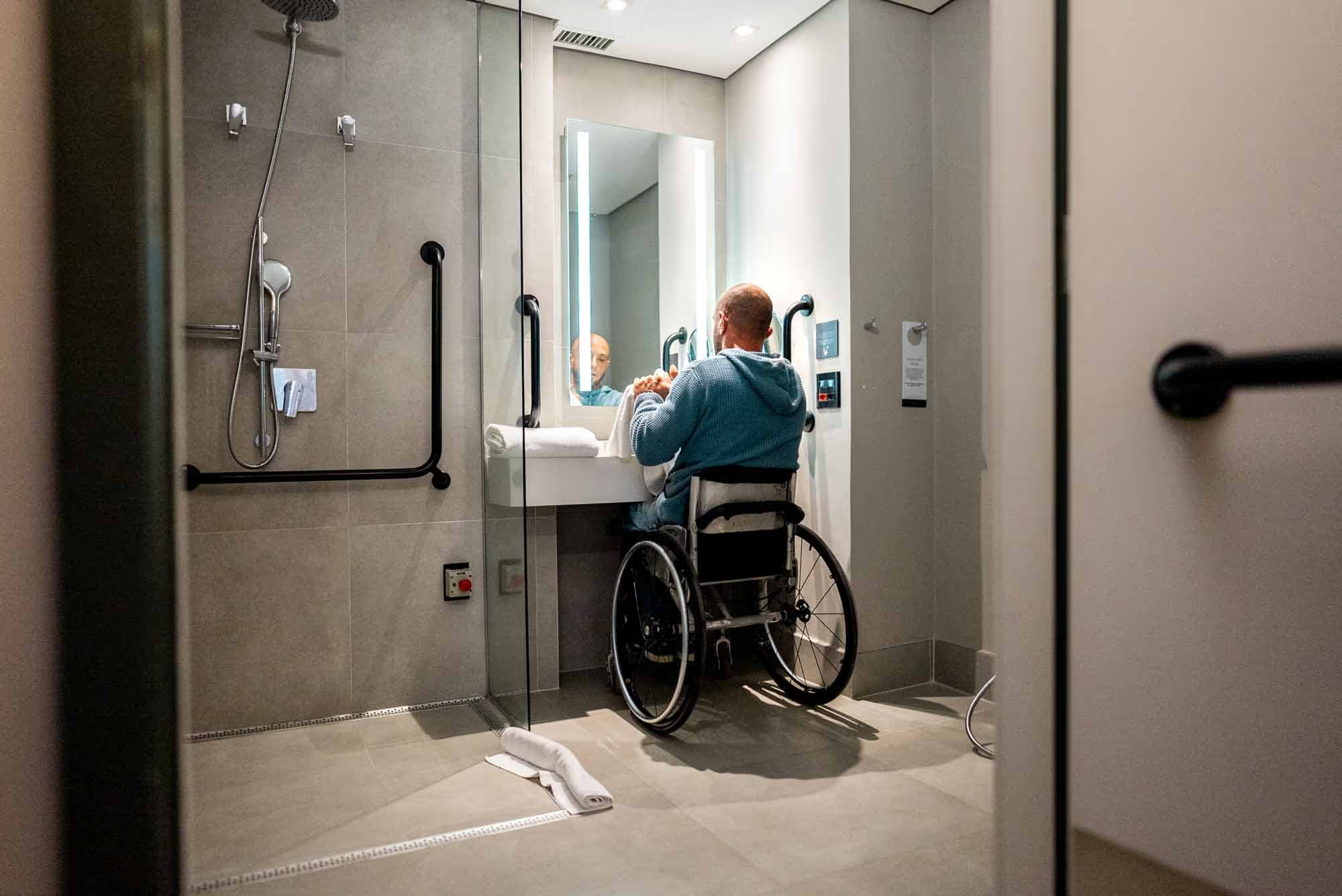
- Tub-to-shower conversions with roll-in or low-threshold access
- Walk-in tubs
- Grab bars strategically placed and properly anchored
- Accessible sinks and vanities
- Non-slip flooring
- Improved lighting for safety
See our accessible bathroom remodeling services.
Entrance and Exit Accessibility
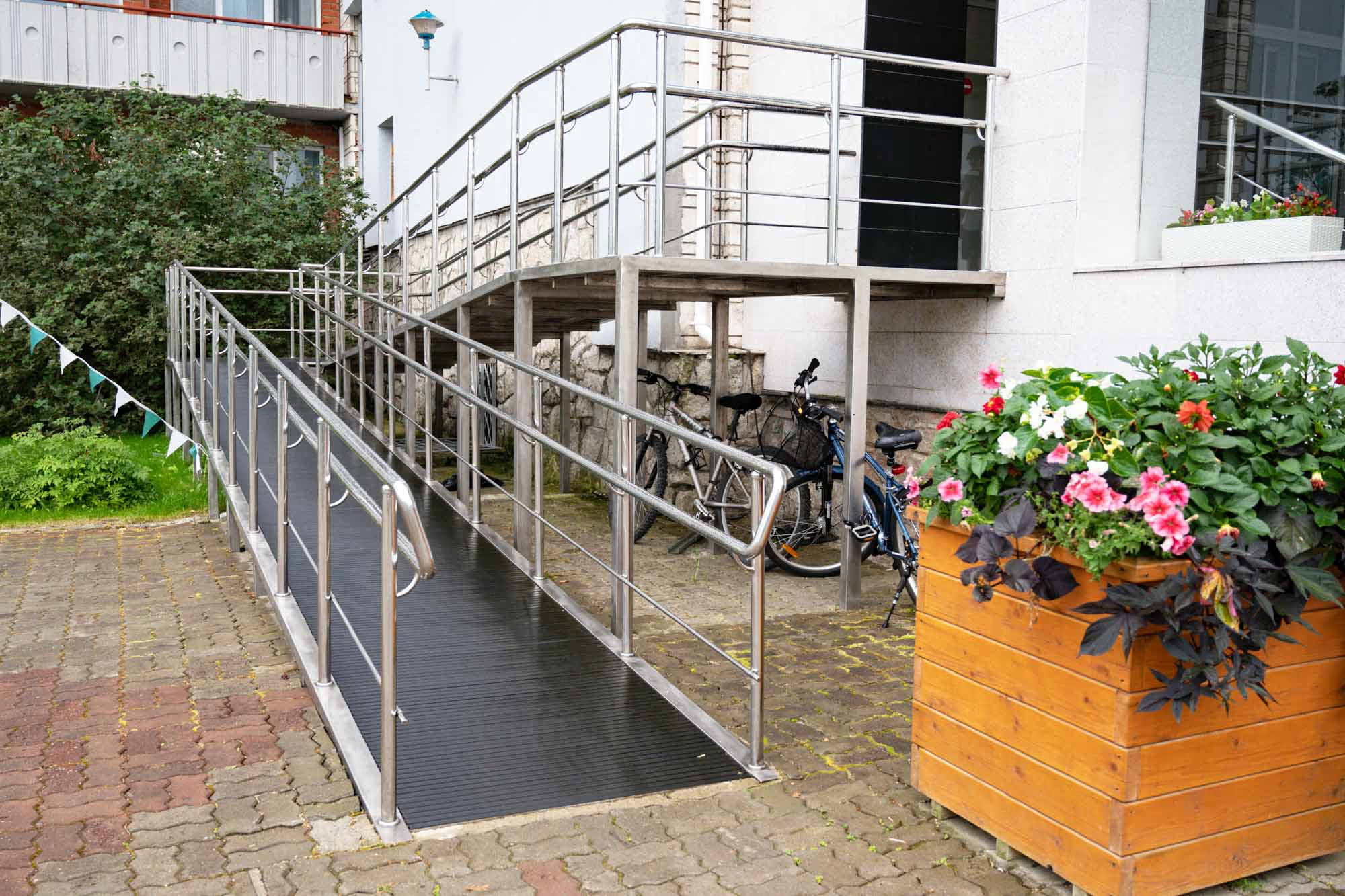
- Wheelchair ramps with proper slope and dimensions
- Platform lifts
- Threshold ramps
- Accessible door hardware (lever handles)
- Automatic door openers
Explore our wheelchair ramp solutions.
Interior Accessibility
- Door widening to 36 inches or more
- Hallway modifications
- Flooring changes for wheelchair access
- Removal of interior thresholds
Learn about door widening services.
Kitchen Modifications
- Lowered countertops for wheelchair access
- Accessible appliances and fixtures
- Pull-out shelving
- Improved task lighting
Check out kitchen accessibility remodeling.
Other Covered Modifications
- Stairlifts and residential elevators
- Bedroom and bathroom relocation to main floor
- Electrical modifications (light switches, outlets at accessible heights)
- Specialized safety systems
How Does the Waivered Services Process Work?
Navigating waivered services can feel overwhelming. Here's a step-by-step breakdown:
Step 1: Determine Eligibility
First, you need to establish eligibility for Medical Assistance (Medicaid) and for the specific waiver program. This involves:
- Financial eligibility assessment
- Medical necessity assessment (showing you need the level of care provided in institutional settings)
- Application to Minnesota Department of Human Services
Where to start: Contact your county social services office or call the Minnesota Senior LinkAge Line at 1-800-333-2433 for guidance.
Step 2: Get Assigned a Case Manager
Once approved for a waiver program, you'll be assigned a case manager (also called a care coordinator). This person is critical to the process. Your case manager:
- Assesses your needs
- Helps develop your care plan
- Authorizes services and supports, including home modifications
- Coordinates with service providers like Remodel for Life
Your case manager is your advocate and the gatekeeper to services.
Step 3: Assessment and Authorization
Your case manager will conduct an assessment of your home and your needs. This includes:
- Identifying safety hazards
- Determining what modifications are medically necessary
- Prioritizing modifications based on your functional limitations
Based on this assessment, your case manager will authorize specific home modifications through the waiver program.
Step 4: Request Estimates from Licensed Providers
Here's where Remodel for Life comes in. You need to work with a licensed Medicaid provider to ensure the work is covered by waivered services.
Remodel for Life is a licensed Minnesota Medicaid provider. This means:
- We're approved to work within the waivered services system
- We understand the documentation and process requirements
- We can submit estimates directly to your case manager
- We're held to professional and ethical standards required by DHS
The process is typically a two-bid system: Your case manager will request estimates from two licensed providers. You or your case manager can contact us directly to request an estimate.
Step 5: Approval and Project Start
Once your case manager reviews the estimates and approves the work, we can schedule your project. We handle all the coordination with the waiver program while you focus on preparing for the improvements.
Step 6: Completion and Final Approval
After we complete the modifications, there's a final walkthrough and approval process. The waiver program pays us directly for the authorized work.
Contact us to start your waivered services project or call (952) 297-2455.
Common Questions About Waivered Services
"Will I have to pay anything out of pocket?"
It depends on your specific situation. Many modifications are fully covered by waivered services if they're deemed medically necessary. However, there are sometimes caps on funding for home modifications (often around $6,000-$7,500 per year, though this varies by waiver and individual circumstances).
If modifications exceed the waiver funding cap, you may need to cover the difference. Some families combine waiver funding with:
- VA benefits (if the individual is a veteran)
- Home equity loans or personal financing
- Grants from disability organizations
- Family contributions
We'll work with you to maximize waiver funding and find solutions for any remaining costs.
"How long does the approval process take?"
Timelines vary, but the process typically takes several weeks to a few months from initial application to project approval. Some factors that affect timing:
- How quickly you can complete the eligibility process
- Your case manager's workload and responsiveness
- The complexity of your situation and needed modifications
Pro tip: Having all your medical documentation organized and being responsive to your case manager's requests speeds things up significantly.
"What if I don't have a case manager yet?"
Start by contacting your county social services office. They can help you:
- Determine which waiver program might be right for you
- Begin the application process
- Get assigned a case manager
If you're unsure where to start, we can point you in the right direction. We've worked with case managers throughout the Twin Cities metro area and understand the system.
"Can I choose my own contractor?"
Yes, but they must be a licensed Medicaid provider. Remodel for Life is licensed and experienced with the waivered services system. Working with an experienced provider makes the process smoother and ensures your modifications will be approved and covered.
"What if my case manager hasn't heard of you?"
That's completely normal, especially if they're new or work in a different region. We're happy to speak directly with your case manager, provide our licensing information, and answer any questions they have about our services and experience.
Simply have your case manager contact us, or provide them our information: (952) 297-2455 or info@remodelforlifemn.com.
Why Work with Remodel for Life for Your Waivered Services Project?
We're Licensed Minnesota Medicaid Providers
We've gone through the background checks, training, and approval process required to work within the waivered services system. This isn't just paperwork—it's accountability and assurance that we'll do things right.
We Understand the Process
We've completed hundreds of waivered services projects. We know how to:
- Work effectively with case managers
- Document projects to meet DHS requirements
- Navigate the approval process
- Submit proper invoicing and paperwork
You don't have to figure out the system alone—we guide you through it.
We Specialize in Accessibility
Unlike general contractors who occasionally do accessibility work, this is all we do. Every project we complete is focused on safety, functionality, and preserving dignity and independence.
We Communicate Clearly
We know this process can be confusing and sometimes frustrating. We commit to:
- Answering your questions honestly
- Keeping you informed throughout the process
- Coordinating with your case manager on your behalf
- Respecting your home and your time
The Truth: Waivered Services Change Lives
Every week, we work with Minnesota families who didn't know these programs existed. The relief on their faces when they learn they can afford the modifications that will keep their loved one safe and independent—it never gets old.
You don't have to choose between safety and finances. These programs exist because Minnesota recognizes that people deserve to live with dignity in their own homes.
If you or someone you love needs home modifications and you're wondering how to pay for it, waivered services might be the answer.
Take the First Step
Talk to your case manager and tell them you'd like Remodel for Life to provide an estimate for your home modifications. If you don't have a case manager yet, contact your county social services office to start the eligibility process.
Once you're ready, we're here to help.
Request a waivered services estimate or call (952) 297-2455.
We serve families throughout the Twin Cities metro area, including White Bear Lake, Stillwater, Oakdale, Woodbury, Minnetonka, Lakeville, and surrounding communities.
Additional Resources
- Minnesota Department of Human Services Waiver Information
- Minnesota Senior LinkAge Line: 1-800-333-2433
- MetroAccess Ride: Transportation for people with disabilities
- VA Home Modification Benefits for Minnesota veterans
Remodel for Life is a licensed Minnesota Medicaid provider specializing in accessibility remodeling, aging-in-place modifications, and waivered service projects. We're committed to helping Minnesota families access the funding and services they need to stay independent at home.
You're facing a difficult situation. Someone you love—maybe your aging parent, your child with disabilities, or your spouse—needs home modifications to stay safe and independent. You know the changes are necessary, but when you start researching costs, your heart sinks.
Wheelchair ramps, accessible bathrooms, widened doorways—these modifications can cost thousands of dollars. The question gnawing at you is: How can we possibly afford this?
Here's what many Minnesota families don't realize: You might not have to pay for it yourself.
Minnesota offers waivered services through the Department of Human Services that can cover the cost of home accessibility modifications. These programs exist specifically to help people with disabilities and older adults stay in their homes rather than moving to institutional care—because it's better for them, and it's more cost-effective for the state.
But navigating the system is complicated. That's what this guide is for.
What Are Waivered Services?
Waivered services (also called Medical Assistance waivers or Medicaid waivers) are programs that provide funding for services and supports that help people with disabilities or significant health needs live in their own homes or communities instead of in nursing homes or institutions.
The term "waiver" refers to the fact that the state is "waiving" certain Medicaid rules to provide services in home and community settings that would typically only be available in institutional care.
For home modifications, this means the state can pay for accessibility remodeling that makes your home safe and functional.
According to Minnesota Department of Human Services, these waivers are designed to support independence, dignity, and quality of life while being fiscally responsible.
Who Qualifies for Waivered Services in Minnesota?
Minnesota offers several different waiver programs, each designed for specific populations:
1. Elderly Waiver (EW)
Who it's for: Adults age 65 and older who need nursing home level of care but want to remain in their homes.
What it covers: Home accessibility modifications, care coordination, personal care services, adult day services, and more.
Common modifications funded: Accessible bathrooms, wheelchair ramps, stairlifts, door widening, safety grab bars.
Eligibility: Must be 65+, eligible for Medical Assistance (MA), and assessed as needing nursing home level of care.
2. Community Alternative Care (CAC) Waiver
Who it's for: Adults who need nursing home level of care due to chronic illness, disability, or age-related conditions.
What it covers: Similar to the Elderly Waiver but available to adults of any age who meet medical necessity criteria.
Common modifications funded: Comprehensive home accessibility modifications including bathrooms, ramps, kitchen adaptations, and more.
Eligibility: Eligible for Medical Assistance and assessed as needing nursing home level of care.
3. Community Access for Disability Inclusion (CADI) Waiver
Who it's for: People with disabilities (age 4 and older) who need support with daily living activities.
What it covers: Environmental accessibility adaptations (home modifications), personal care, supported living, respite care, and more.
Common modifications funded: Wheelchair ramps, accessible bathrooms, door widening, kitchen modifications, home technology for independence.
Eligibility: Must have a qualifying disability, be eligible for MA, and require ICF-DD (Intermediate Care Facility for Developmental Disabilities) level of care.
4. Brain Injury (BI) Waiver
Who it's for: Individuals with acquired brain injuries (traumatic or non-traumatic) who need specialized support.
What it covers: Home modifications, 24-hour emergency assistance, behavioral services, specialized medical equipment, and more.
Common modifications funded: Safety modifications, accessible bathrooms, ramps, environmental controls.
Eligibility: Must have a qualifying brain injury, be eligible for MA, and require neurobehavioral hospital level of care.
5. Developmental Disabilities (DD) Waiver
Who it's for: People with developmental disabilities diagnosed before age 22 who need significant support.
What it covers: Comprehensive services including home modifications, residential services, employment supports, and more.
Common modifications funded: Full accessibility modifications to support independent living.
Eligibility: Must have a qualifying developmental disability, be eligible for MA, and require ICF-DD level of care.
Learn more about Minnesota waivered services and how Remodel for Life can help you access these programs.
What Home Modifications Can Waivered Services Cover?
The specific term used in waiver programs is "Environmental Accessibility Adaptations" (EAA) or "Home Modifications." These can include:
Bathroom Modifications
- Tub-to-shower conversions with roll-in or low-threshold access
- Walk-in tubs
- Grab bars strategically placed and properly anchored
- Accessible sinks and vanities
- Non-slip flooring
- Improved lighting for safety
See our accessible bathroom remodeling services.
Entrance and Exit Accessibility
- Wheelchair ramps with proper slope and dimensions
- Platform lifts
- Threshold ramps
- Accessible door hardware (lever handles)
- Automatic door openers
Explore our wheelchair ramp solutions.
Interior Accessibility
- Door widening to 36 inches or more
- Hallway modifications
- Flooring changes for wheelchair access
- Removal of interior thresholds
Learn about door widening services.
Kitchen Modifications
- Lowered countertops for wheelchair access
- Accessible appliances and fixtures
- Pull-out shelving
- Improved task lighting
Check out kitchen accessibility remodeling.
Other Covered Modifications
- Stairlifts and residential elevators
- Bedroom and bathroom relocation to main floor
- Electrical modifications (light switches, outlets at accessible heights)
- Specialized safety systems
How Does the Waivered Services Process Work?
Navigating waivered services can feel overwhelming. Here's a step-by-step breakdown:
Step 1: Determine Eligibility
First, you need to establish eligibility for Medical Assistance (Medicaid) and for the specific waiver program. This involves:
- Financial eligibility assessment
- Medical necessity assessment (showing you need the level of care provided in institutional settings)
- Application to Minnesota Department of Human Services
Where to start: Contact your county social services office or call the Minnesota Senior LinkAge Line at 1-800-333-2433 for guidance.
Step 2: Get Assigned a Case Manager
Once approved for a waiver program, you'll be assigned a case manager (also called a care coordinator). This person is critical to the process. Your case manager:
- Assesses your needs
- Helps develop your care plan
- Authorizes services and supports, including home modifications
- Coordinates with service providers like Remodel for Life
Your case manager is your advocate and the gatekeeper to services.
Step 3: Assessment and Authorization
Your case manager will conduct an assessment of your home and your needs. This includes:
- Identifying safety hazards
- Determining what modifications are medically necessary
- Prioritizing modifications based on your functional limitations
Based on this assessment, your case manager will authorize specific home modifications through the waiver program.
Step 4: Request Estimates from Licensed Providers
Here's where Remodel for Life comes in. You need to work with a licensed Medicaid provider to ensure the work is covered by waivered services.
Remodel for Life is a licensed Minnesota Medicaid provider. This means:
- We're approved to work within the waivered services system
- We understand the documentation and process requirements
- We can submit estimates directly to your case manager
- We're held to professional and ethical standards required by DHS
The process is typically a two-bid system: Your case manager will request estimates from two licensed providers. You or your case manager can contact us directly to request an estimate.
Step 5: Approval and Project Start
Once your case manager reviews the estimates and approves the work, we can schedule your project. We handle all the coordination with the waiver program while you focus on preparing for the improvements.
Step 6: Completion and Final Approval
After we complete the modifications, there's a final walkthrough and approval process. The waiver program pays us directly for the authorized work.
Contact us to start your waivered services project or call (952) 297-2455.
Common Questions About Waivered Services
"Will I have to pay anything out of pocket?"
It depends on your specific situation. Many modifications are fully covered by waivered services if they're deemed medically necessary. However, there are sometimes caps on funding for home modifications (often around $6,000-$7,500 per year, though this varies by waiver and individual circumstances).
If modifications exceed the waiver funding cap, you may need to cover the difference. Some families combine waiver funding with:
- VA benefits (if the individual is a veteran)
- Home equity loans or personal financing
- Grants from disability organizations
- Family contributions
We'll work with you to maximize waiver funding and find solutions for any remaining costs.
"How long does the approval process take?"
Timelines vary, but the process typically takes several weeks to a few months from initial application to project approval. Some factors that affect timing:
- How quickly you can complete the eligibility process
- Your case manager's workload and responsiveness
- The complexity of your situation and needed modifications
Pro tip: Having all your medical documentation organized and being responsive to your case manager's requests speeds things up significantly.
"What if I don't have a case manager yet?"
Start by contacting your county social services office. They can help you:
- Determine which waiver program might be right for you
- Begin the application process
- Get assigned a case manager
If you're unsure where to start, we can point you in the right direction. We've worked with case managers throughout the Twin Cities metro area and understand the system.
"Can I choose my own contractor?"
Yes, but they must be a licensed Medicaid provider. Remodel for Life is licensed and experienced with the waivered services system. Working with an experienced provider makes the process smoother and ensures your modifications will be approved and covered.
"What if my case manager hasn't heard of you?"
That's completely normal, especially if they're new or work in a different region. We're happy to speak directly with your case manager, provide our licensing information, and answer any questions they have about our services and experience.
Simply have your case manager contact us, or provide them our information: (952) 297-2455 or info@remodelforlifemn.com.
Why Work with Remodel for Life for Your Waivered Services Project?
We're Licensed Minnesota Medicaid Providers
We've gone through the background checks, training, and approval process required to work within the waivered services system. This isn't just paperwork—it's accountability and assurance that we'll do things right.
We Understand the Process
We've completed hundreds of waivered services projects. We know how to:
- Work effectively with case managers
- Document projects to meet DHS requirements
- Navigate the approval process
- Submit proper invoicing and paperwork
You don't have to figure out the system alone—we guide you through it.
We Specialize in Accessibility
Unlike general contractors who occasionally do accessibility work, this is all we do. Every project we complete is focused on safety, functionality, and preserving dignity and independence.
We Communicate Clearly
We know this process can be confusing and sometimes frustrating. We commit to:
- Answering your questions honestly
- Keeping you informed throughout the process
- Coordinating with your case manager on your behalf
- Respecting your home and your time
The Truth: Waivered Services Change Lives
Every week, we work with Minnesota families who didn't know these programs existed. The relief on their faces when they learn they can afford the modifications that will keep their loved one safe and independent—it never gets old.
You don't have to choose between safety and finances. These programs exist because Minnesota recognizes that people deserve to live with dignity in their own homes.
If you or someone you love needs home modifications and you're wondering how to pay for it, waivered services might be the answer.
Take the First Step
Talk to your case manager and tell them you'd like Remodel for Life to provide an estimate for your home modifications. If you don't have a case manager yet, contact your county social services office to start the eligibility process.
Once you're ready, we're here to help.
Request a waivered services estimate or call (952) 297-2455.
We serve families throughout the Twin Cities metro area, including White Bear Lake, Stillwater, Oakdale, Woodbury, Minnetonka, Lakeville, and surrounding communities.
Additional Resources
- Minnesota Department of Human Services Waiver Information
- Minnesota Senior LinkAge Line: 1-800-333-2433
- MetroAccess Ride: Transportation for people with disabilities
- VA Home Modification Benefits for Minnesota veterans
Remodel for Life is a licensed Minnesota Medicaid provider specializing in accessibility remodeling, aging-in-place modifications, and waivered service projects. We're committed to helping Minnesota families access the funding and services they need to stay independent at home.
You're facing a difficult situation. Someone you love—maybe your aging parent, your child with disabilities, or your spouse—needs home modifications to stay safe and independent. You know the changes are necessary, but when you start researching costs, your heart sinks.
Wheelchair ramps, accessible bathrooms, widened doorways—these modifications can cost thousands of dollars. The question gnawing at you is: How can we possibly afford this?
Here's what many Minnesota families don't realize: You might not have to pay for it yourself.
Minnesota offers waivered services through the Department of Human Services that can cover the cost of home accessibility modifications. These programs exist specifically to help people with disabilities and older adults stay in their homes rather than moving to institutional care—because it's better for them, and it's more cost-effective for the state.
But navigating the system is complicated. That's what this guide is for.
What Are Waivered Services?
Waivered services (also called Medical Assistance waivers or Medicaid waivers) are programs that provide funding for services and supports that help people with disabilities or significant health needs live in their own homes or communities instead of in nursing homes or institutions.
The term "waiver" refers to the fact that the state is "waiving" certain Medicaid rules to provide services in home and community settings that would typically only be available in institutional care.
For home modifications, this means the state can pay for accessibility remodeling that makes your home safe and functional.
According to Minnesota Department of Human Services, these waivers are designed to support independence, dignity, and quality of life while being fiscally responsible.
Who Qualifies for Waivered Services in Minnesota?
Minnesota offers several different waiver programs, each designed for specific populations:
1. Elderly Waiver (EW)
Who it's for: Adults age 65 and older who need nursing home level of care but want to remain in their homes.
What it covers: Home accessibility modifications, care coordination, personal care services, adult day services, and more.
Common modifications funded: Accessible bathrooms, wheelchair ramps, stairlifts, door widening, safety grab bars.
Eligibility: Must be 65+, eligible for Medical Assistance (MA), and assessed as needing nursing home level of care.
2. Community Alternative Care (CAC) Waiver
Who it's for: Adults who need nursing home level of care due to chronic illness, disability, or age-related conditions.
What it covers: Similar to the Elderly Waiver but available to adults of any age who meet medical necessity criteria.
Common modifications funded: Comprehensive home accessibility modifications including bathrooms, ramps, kitchen adaptations, and more.
Eligibility: Eligible for Medical Assistance and assessed as needing nursing home level of care.
3. Community Access for Disability Inclusion (CADI) Waiver
Who it's for: People with disabilities (age 4 and older) who need support with daily living activities.
What it covers: Environmental accessibility adaptations (home modifications), personal care, supported living, respite care, and more.
Common modifications funded: Wheelchair ramps, accessible bathrooms, door widening, kitchen modifications, home technology for independence.
Eligibility: Must have a qualifying disability, be eligible for MA, and require ICF-DD (Intermediate Care Facility for Developmental Disabilities) level of care.
4. Brain Injury (BI) Waiver
Who it's for: Individuals with acquired brain injuries (traumatic or non-traumatic) who need specialized support.
What it covers: Home modifications, 24-hour emergency assistance, behavioral services, specialized medical equipment, and more.
Common modifications funded: Safety modifications, accessible bathrooms, ramps, environmental controls.
Eligibility: Must have a qualifying brain injury, be eligible for MA, and require neurobehavioral hospital level of care.
5. Developmental Disabilities (DD) Waiver
Who it's for: People with developmental disabilities diagnosed before age 22 who need significant support.
What it covers: Comprehensive services including home modifications, residential services, employment supports, and more.
Common modifications funded: Full accessibility modifications to support independent living.
Eligibility: Must have a qualifying developmental disability, be eligible for MA, and require ICF-DD level of care.
Learn more about Minnesota waivered services and how Remodel for Life can help you access these programs.
What Home Modifications Can Waivered Services Cover?
The specific term used in waiver programs is "Environmental Accessibility Adaptations" (EAA) or "Home Modifications." These can include:
Bathroom Modifications
- Tub-to-shower conversions with roll-in or low-threshold access
- Walk-in tubs
- Grab bars strategically placed and properly anchored
- Accessible sinks and vanities
- Non-slip flooring
- Improved lighting for safety
See our accessible bathroom remodeling services.
Entrance and Exit Accessibility
- Wheelchair ramps with proper slope and dimensions
- Platform lifts
- Threshold ramps
- Accessible door hardware (lever handles)
- Automatic door openers
Explore our wheelchair ramp solutions.
Interior Accessibility
- Door widening to 36 inches or more
- Hallway modifications
- Flooring changes for wheelchair access
- Removal of interior thresholds
Learn about door widening services.
Kitchen Modifications
- Lowered countertops for wheelchair access
- Accessible appliances and fixtures
- Pull-out shelving
- Improved task lighting
Check out kitchen accessibility remodeling.
Other Covered Modifications
- Stairlifts and residential elevators
- Bedroom and bathroom relocation to main floor
- Electrical modifications (light switches, outlets at accessible heights)
- Specialized safety systems
How Does the Waivered Services Process Work?
Navigating waivered services can feel overwhelming. Here's a step-by-step breakdown:
Step 1: Determine Eligibility
First, you need to establish eligibility for Medical Assistance (Medicaid) and for the specific waiver program. This involves:
- Financial eligibility assessment
- Medical necessity assessment (showing you need the level of care provided in institutional settings)
- Application to Minnesota Department of Human Services
Where to start: Contact your county social services office or call the Minnesota Senior LinkAge Line at 1-800-333-2433 for guidance.
Step 2: Get Assigned a Case Manager
Once approved for a waiver program, you'll be assigned a case manager (also called a care coordinator). This person is critical to the process. Your case manager:
- Assesses your needs
- Helps develop your care plan
- Authorizes services and supports, including home modifications
- Coordinates with service providers like Remodel for Life
Your case manager is your advocate and the gatekeeper to services.
Step 3: Assessment and Authorization
Your case manager will conduct an assessment of your home and your needs. This includes:
- Identifying safety hazards
- Determining what modifications are medically necessary
- Prioritizing modifications based on your functional limitations
Based on this assessment, your case manager will authorize specific home modifications through the waiver program.
Step 4: Request Estimates from Licensed Providers
Here's where Remodel for Life comes in. You need to work with a licensed Medicaid provider to ensure the work is covered by waivered services.
Remodel for Life is a licensed Minnesota Medicaid provider. This means:
- We're approved to work within the waivered services system
- We understand the documentation and process requirements
- We can submit estimates directly to your case manager
- We're held to professional and ethical standards required by DHS
The process is typically a two-bid system: Your case manager will request estimates from two licensed providers. You or your case manager can contact us directly to request an estimate.
Step 5: Approval and Project Start
Once your case manager reviews the estimates and approves the work, we can schedule your project. We handle all the coordination with the waiver program while you focus on preparing for the improvements.
Step 6: Completion and Final Approval
After we complete the modifications, there's a final walkthrough and approval process. The waiver program pays us directly for the authorized work.
Contact us to start your waivered services project or call (952) 297-2455.
Common Questions About Waivered Services
"Will I have to pay anything out of pocket?"
It depends on your specific situation. Many modifications are fully covered by waivered services if they're deemed medically necessary. However, there are sometimes caps on funding for home modifications (often around $6,000-$7,500 per year, though this varies by waiver and individual circumstances).
If modifications exceed the waiver funding cap, you may need to cover the difference. Some families combine waiver funding with:
- VA benefits (if the individual is a veteran)
- Home equity loans or personal financing
- Grants from disability organizations
- Family contributions
We'll work with you to maximize waiver funding and find solutions for any remaining costs.
"How long does the approval process take?"
Timelines vary, but the process typically takes several weeks to a few months from initial application to project approval. Some factors that affect timing:
- How quickly you can complete the eligibility process
- Your case manager's workload and responsiveness
- The complexity of your situation and needed modifications
Pro tip: Having all your medical documentation organized and being responsive to your case manager's requests speeds things up significantly.
"What if I don't have a case manager yet?"
Start by contacting your county social services office. They can help you:
- Determine which waiver program might be right for you
- Begin the application process
- Get assigned a case manager
If you're unsure where to start, we can point you in the right direction. We've worked with case managers throughout the Twin Cities metro area and understand the system.
"Can I choose my own contractor?"
Yes, but they must be a licensed Medicaid provider. Remodel for Life is licensed and experienced with the waivered services system. Working with an experienced provider makes the process smoother and ensures your modifications will be approved and covered.
"What if my case manager hasn't heard of you?"
That's completely normal, especially if they're new or work in a different region. We're happy to speak directly with your case manager, provide our licensing information, and answer any questions they have about our services and experience.
Simply have your case manager contact us, or provide them our information: (952) 297-2455 or info@remodelforlifemn.com.
Why Work with Remodel for Life for Your Waivered Services Project?
We're Licensed Minnesota Medicaid Providers
We've gone through the background checks, training, and approval process required to work within the waivered services system. This isn't just paperwork—it's accountability and assurance that we'll do things right.
We Understand the Process
We've completed hundreds of waivered services projects. We know how to:
- Work effectively with case managers
- Document projects to meet DHS requirements
- Navigate the approval process
- Submit proper invoicing and paperwork
You don't have to figure out the system alone—we guide you through it.
We Specialize in Accessibility
Unlike general contractors who occasionally do accessibility work, this is all we do. Every project we complete is focused on safety, functionality, and preserving dignity and independence.
We Communicate Clearly
We know this process can be confusing and sometimes frustrating. We commit to:
- Answering your questions honestly
- Keeping you informed throughout the process
- Coordinating with your case manager on your behalf
- Respecting your home and your time
The Truth: Waivered Services Change Lives
Every week, we work with Minnesota families who didn't know these programs existed. The relief on their faces when they learn they can afford the modifications that will keep their loved one safe and independent—it never gets old.
You don't have to choose between safety and finances. These programs exist because Minnesota recognizes that people deserve to live with dignity in their own homes.
If you or someone you love needs home modifications and you're wondering how to pay for it, waivered services might be the answer.
Take the First Step
Talk to your case manager and tell them you'd like Remodel for Life to provide an estimate for your home modifications. If you don't have a case manager yet, contact your county social services office to start the eligibility process.
Once you're ready, we're here to help.
Request a waivered services estimate or call (952) 297-2455.
We serve families throughout the Twin Cities metro area, including White Bear Lake, Stillwater, Oakdale, Woodbury, Minnetonka, Lakeville, and surrounding communities.
Additional Resources
- Minnesota Department of Human Services Waiver Information
- Minnesota Senior LinkAge Line: 1-800-333-2433
- MetroAccess Ride: Transportation for people with disabilities
- VA Home Modification Benefits for Minnesota veterans
Remodel for Life is a licensed Minnesota Medicaid provider specializing in accessibility remodeling, aging-in-place modifications, and waivered service projects. We're committed to helping Minnesota families access the funding and services they need to stay independent at home.
You're facing a difficult situation. Someone you love—maybe your aging parent, your child with disabilities, or your spouse—needs home modifications to stay safe and independent. You know the changes are necessary, but when you start researching costs, your heart sinks.
Wheelchair ramps, accessible bathrooms, widened doorways—these modifications can cost thousands of dollars. The question gnawing at you is: How can we possibly afford this?
Here's what many Minnesota families don't realize: You might not have to pay for it yourself.
Minnesota offers waivered services through the Department of Human Services that can cover the cost of home accessibility modifications. These programs exist specifically to help people with disabilities and older adults stay in their homes rather than moving to institutional care—because it's better for them, and it's more cost-effective for the state.
But navigating the system is complicated. That's what this guide is for.
What Are Waivered Services?
Waivered services (also called Medical Assistance waivers or Medicaid waivers) are programs that provide funding for services and supports that help people with disabilities or significant health needs live in their own homes or communities instead of in nursing homes or institutions.
The term "waiver" refers to the fact that the state is "waiving" certain Medicaid rules to provide services in home and community settings that would typically only be available in institutional care.
For home modifications, this means the state can pay for accessibility remodeling that makes your home safe and functional.
According to Minnesota Department of Human Services, these waivers are designed to support independence, dignity, and quality of life while being fiscally responsible.
Who Qualifies for Waivered Services in Minnesota?
Minnesota offers several different waiver programs, each designed for specific populations:
1. Elderly Waiver (EW)
Who it's for: Adults age 65 and older who need nursing home level of care but want to remain in their homes.
What it covers: Home accessibility modifications, care coordination, personal care services, adult day services, and more.
Common modifications funded: Accessible bathrooms, wheelchair ramps, stairlifts, door widening, safety grab bars.
Eligibility: Must be 65+, eligible for Medical Assistance (MA), and assessed as needing nursing home level of care.
2. Community Alternative Care (CAC) Waiver
Who it's for: Adults who need nursing home level of care due to chronic illness, disability, or age-related conditions.
What it covers: Similar to the Elderly Waiver but available to adults of any age who meet medical necessity criteria.
Common modifications funded: Comprehensive home accessibility modifications including bathrooms, ramps, kitchen adaptations, and more.
Eligibility: Eligible for Medical Assistance and assessed as needing nursing home level of care.
3. Community Access for Disability Inclusion (CADI) Waiver
Who it's for: People with disabilities (age 4 and older) who need support with daily living activities.
What it covers: Environmental accessibility adaptations (home modifications), personal care, supported living, respite care, and more.
Common modifications funded: Wheelchair ramps, accessible bathrooms, door widening, kitchen modifications, home technology for independence.
Eligibility: Must have a qualifying disability, be eligible for MA, and require ICF-DD (Intermediate Care Facility for Developmental Disabilities) level of care.
4. Brain Injury (BI) Waiver
Who it's for: Individuals with acquired brain injuries (traumatic or non-traumatic) who need specialized support.
What it covers: Home modifications, 24-hour emergency assistance, behavioral services, specialized medical equipment, and more.
Common modifications funded: Safety modifications, accessible bathrooms, ramps, environmental controls.
Eligibility: Must have a qualifying brain injury, be eligible for MA, and require neurobehavioral hospital level of care.
5. Developmental Disabilities (DD) Waiver
Who it's for: People with developmental disabilities diagnosed before age 22 who need significant support.
What it covers: Comprehensive services including home modifications, residential services, employment supports, and more.
Common modifications funded: Full accessibility modifications to support independent living.
Eligibility: Must have a qualifying developmental disability, be eligible for MA, and require ICF-DD level of care.
Learn more about Minnesota waivered services and how Remodel for Life can help you access these programs.
What Home Modifications Can Waivered Services Cover?
The specific term used in waiver programs is "Environmental Accessibility Adaptations" (EAA) or "Home Modifications." These can include:
Bathroom Modifications
- Tub-to-shower conversions with roll-in or low-threshold access
- Walk-in tubs
- Grab bars strategically placed and properly anchored
- Accessible sinks and vanities
- Non-slip flooring
- Improved lighting for safety
See our accessible bathroom remodeling services.
Entrance and Exit Accessibility
- Wheelchair ramps with proper slope and dimensions
- Platform lifts
- Threshold ramps
- Accessible door hardware (lever handles)
- Automatic door openers
Explore our wheelchair ramp solutions.
Interior Accessibility
- Door widening to 36 inches or more
- Hallway modifications
- Flooring changes for wheelchair access
- Removal of interior thresholds
Learn about door widening services.
Kitchen Modifications
- Lowered countertops for wheelchair access
- Accessible appliances and fixtures
- Pull-out shelving
- Improved task lighting
Check out kitchen accessibility remodeling.
Other Covered Modifications
- Stairlifts and residential elevators
- Bedroom and bathroom relocation to main floor
- Electrical modifications (light switches, outlets at accessible heights)
- Specialized safety systems
How Does the Waivered Services Process Work?
Navigating waivered services can feel overwhelming. Here's a step-by-step breakdown:
Step 1: Determine Eligibility
First, you need to establish eligibility for Medical Assistance (Medicaid) and for the specific waiver program. This involves:
- Financial eligibility assessment
- Medical necessity assessment (showing you need the level of care provided in institutional settings)
- Application to Minnesota Department of Human Services
Where to start: Contact your county social services office or call the Minnesota Senior LinkAge Line at 1-800-333-2433 for guidance.
Step 2: Get Assigned a Case Manager
Once approved for a waiver program, you'll be assigned a case manager (also called a care coordinator). This person is critical to the process. Your case manager:
- Assesses your needs
- Helps develop your care plan
- Authorizes services and supports, including home modifications
- Coordinates with service providers like Remodel for Life
Your case manager is your advocate and the gatekeeper to services.
Step 3: Assessment and Authorization
Your case manager will conduct an assessment of your home and your needs. This includes:
- Identifying safety hazards
- Determining what modifications are medically necessary
- Prioritizing modifications based on your functional limitations
Based on this assessment, your case manager will authorize specific home modifications through the waiver program.
Step 4: Request Estimates from Licensed Providers
Here's where Remodel for Life comes in. You need to work with a licensed Medicaid provider to ensure the work is covered by waivered services.
Remodel for Life is a licensed Minnesota Medicaid provider. This means:
- We're approved to work within the waivered services system
- We understand the documentation and process requirements
- We can submit estimates directly to your case manager
- We're held to professional and ethical standards required by DHS
The process is typically a two-bid system: Your case manager will request estimates from two licensed providers. You or your case manager can contact us directly to request an estimate.
Step 5: Approval and Project Start
Once your case manager reviews the estimates and approves the work, we can schedule your project. We handle all the coordination with the waiver program while you focus on preparing for the improvements.
Step 6: Completion and Final Approval
After we complete the modifications, there's a final walkthrough and approval process. The waiver program pays us directly for the authorized work.
Contact us to start your waivered services project or call (952) 297-2455.
Common Questions About Waivered Services
"Will I have to pay anything out of pocket?"
It depends on your specific situation. Many modifications are fully covered by waivered services if they're deemed medically necessary. However, there are sometimes caps on funding for home modifications (often around $6,000-$7,500 per year, though this varies by waiver and individual circumstances).
If modifications exceed the waiver funding cap, you may need to cover the difference. Some families combine waiver funding with:
- VA benefits (if the individual is a veteran)
- Home equity loans or personal financing
- Grants from disability organizations
- Family contributions
We'll work with you to maximize waiver funding and find solutions for any remaining costs.
"How long does the approval process take?"
Timelines vary, but the process typically takes several weeks to a few months from initial application to project approval. Some factors that affect timing:
- How quickly you can complete the eligibility process
- Your case manager's workload and responsiveness
- The complexity of your situation and needed modifications
Pro tip: Having all your medical documentation organized and being responsive to your case manager's requests speeds things up significantly.
"What if I don't have a case manager yet?"
Start by contacting your county social services office. They can help you:
- Determine which waiver program might be right for you
- Begin the application process
- Get assigned a case manager
If you're unsure where to start, we can point you in the right direction. We've worked with case managers throughout the Twin Cities metro area and understand the system.
"Can I choose my own contractor?"
Yes, but they must be a licensed Medicaid provider. Remodel for Life is licensed and experienced with the waivered services system. Working with an experienced provider makes the process smoother and ensures your modifications will be approved and covered.
"What if my case manager hasn't heard of you?"
That's completely normal, especially if they're new or work in a different region. We're happy to speak directly with your case manager, provide our licensing information, and answer any questions they have about our services and experience.
Simply have your case manager contact us, or provide them our information: (952) 297-2455 or info@remodelforlifemn.com.
Why Work with Remodel for Life for Your Waivered Services Project?
We're Licensed Minnesota Medicaid Providers
We've gone through the background checks, training, and approval process required to work within the waivered services system. This isn't just paperwork—it's accountability and assurance that we'll do things right.
We Understand the Process
We've completed hundreds of waivered services projects. We know how to:
- Work effectively with case managers
- Document projects to meet DHS requirements
- Navigate the approval process
- Submit proper invoicing and paperwork
You don't have to figure out the system alone—we guide you through it.
We Specialize in Accessibility
Unlike general contractors who occasionally do accessibility work, this is all we do. Every project we complete is focused on safety, functionality, and preserving dignity and independence.
We Communicate Clearly
We know this process can be confusing and sometimes frustrating. We commit to:
- Answering your questions honestly
- Keeping you informed throughout the process
- Coordinating with your case manager on your behalf
- Respecting your home and your time
The Truth: Waivered Services Change Lives
Every week, we work with Minnesota families who didn't know these programs existed. The relief on their faces when they learn they can afford the modifications that will keep their loved one safe and independent—it never gets old.
You don't have to choose between safety and finances. These programs exist because Minnesota recognizes that people deserve to live with dignity in their own homes.
If you or someone you love needs home modifications and you're wondering how to pay for it, waivered services might be the answer.
Take the First Step
Talk to your case manager and tell them you'd like Remodel for Life to provide an estimate for your home modifications. If you don't have a case manager yet, contact your county social services office to start the eligibility process.
Once you're ready, we're here to help.
Request a waivered services estimate or call (952) 297-2455.
We serve families throughout the Twin Cities metro area, including White Bear Lake, Stillwater, Oakdale, Woodbury, Minnetonka, Lakeville, and surrounding communities.
Additional Resources
- Minnesota Department of Human Services Waiver Information
- Minnesota Senior LinkAge Line: 1-800-333-2433
- MetroAccess Ride: Transportation for people with disabilities
- VA Home Modification Benefits for Minnesota veterans
Remodel for Life is a licensed Minnesota Medicaid provider specializing in accessibility remodeling, aging-in-place modifications, and waivered service projects. We're committed to helping Minnesota families access the funding and services they need to stay independent at home.
You're facing a difficult situation. Someone you love—maybe your aging parent, your child with disabilities, or your spouse—needs home modifications to stay safe and independent. You know the changes are necessary, but when you start researching costs, your heart sinks.
Wheelchair ramps, accessible bathrooms, widened doorways—these modifications can cost thousands of dollars. The question gnawing at you is: How can we possibly afford this?
Here's what many Minnesota families don't realize: You might not have to pay for it yourself.
Minnesota offers waivered services through the Department of Human Services that can cover the cost of home accessibility modifications. These programs exist specifically to help people with disabilities and older adults stay in their homes rather than moving to institutional care—because it's better for them, and it's more cost-effective for the state.
But navigating the system is complicated. That's what this guide is for.
What Are Waivered Services?
Waivered services (also called Medical Assistance waivers or Medicaid waivers) are programs that provide funding for services and supports that help people with disabilities or significant health needs live in their own homes or communities instead of in nursing homes or institutions.
The term "waiver" refers to the fact that the state is "waiving" certain Medicaid rules to provide services in home and community settings that would typically only be available in institutional care.
For home modifications, this means the state can pay for accessibility remodeling that makes your home safe and functional.
According to Minnesota Department of Human Services, these waivers are designed to support independence, dignity, and quality of life while being fiscally responsible.
Who Qualifies for Waivered Services in Minnesota?
Minnesota offers several different waiver programs, each designed for specific populations:
1. Elderly Waiver (EW)
Who it's for: Adults age 65 and older who need nursing home level of care but want to remain in their homes.
What it covers: Home accessibility modifications, care coordination, personal care services, adult day services, and more.
Common modifications funded: Accessible bathrooms, wheelchair ramps, stairlifts, door widening, safety grab bars.
Eligibility: Must be 65+, eligible for Medical Assistance (MA), and assessed as needing nursing home level of care.
2. Community Alternative Care (CAC) Waiver
Who it's for: Adults who need nursing home level of care due to chronic illness, disability, or age-related conditions.
What it covers: Similar to the Elderly Waiver but available to adults of any age who meet medical necessity criteria.
Common modifications funded: Comprehensive home accessibility modifications including bathrooms, ramps, kitchen adaptations, and more.
Eligibility: Eligible for Medical Assistance and assessed as needing nursing home level of care.
3. Community Access for Disability Inclusion (CADI) Waiver
Who it's for: People with disabilities (age 4 and older) who need support with daily living activities.
What it covers: Environmental accessibility adaptations (home modifications), personal care, supported living, respite care, and more.
Common modifications funded: Wheelchair ramps, accessible bathrooms, door widening, kitchen modifications, home technology for independence.
Eligibility: Must have a qualifying disability, be eligible for MA, and require ICF-DD (Intermediate Care Facility for Developmental Disabilities) level of care.
4. Brain Injury (BI) Waiver
Who it's for: Individuals with acquired brain injuries (traumatic or non-traumatic) who need specialized support.
What it covers: Home modifications, 24-hour emergency assistance, behavioral services, specialized medical equipment, and more.
Common modifications funded: Safety modifications, accessible bathrooms, ramps, environmental controls.
Eligibility: Must have a qualifying brain injury, be eligible for MA, and require neurobehavioral hospital level of care.
5. Developmental Disabilities (DD) Waiver
Who it's for: People with developmental disabilities diagnosed before age 22 who need significant support.
What it covers: Comprehensive services including home modifications, residential services, employment supports, and more.
Common modifications funded: Full accessibility modifications to support independent living.
Eligibility: Must have a qualifying developmental disability, be eligible for MA, and require ICF-DD level of care.
Learn more about Minnesota waivered services and how Remodel for Life can help you access these programs.
What Home Modifications Can Waivered Services Cover?
The specific term used in waiver programs is "Environmental Accessibility Adaptations" (EAA) or "Home Modifications." These can include:
Bathroom Modifications
- Tub-to-shower conversions with roll-in or low-threshold access
- Walk-in tubs
- Grab bars strategically placed and properly anchored
- Accessible sinks and vanities
- Non-slip flooring
- Improved lighting for safety
See our accessible bathroom remodeling services.
Entrance and Exit Accessibility
- Wheelchair ramps with proper slope and dimensions
- Platform lifts
- Threshold ramps
- Accessible door hardware (lever handles)
- Automatic door openers
Explore our wheelchair ramp solutions.
Interior Accessibility
- Door widening to 36 inches or more
- Hallway modifications
- Flooring changes for wheelchair access
- Removal of interior thresholds
Learn about door widening services.
Kitchen Modifications
- Lowered countertops for wheelchair access
- Accessible appliances and fixtures
- Pull-out shelving
- Improved task lighting
Check out kitchen accessibility remodeling.
Other Covered Modifications
- Stairlifts and residential elevators
- Bedroom and bathroom relocation to main floor
- Electrical modifications (light switches, outlets at accessible heights)
- Specialized safety systems
How Does the Waivered Services Process Work?
Navigating waivered services can feel overwhelming. Here's a step-by-step breakdown:
Step 1: Determine Eligibility
First, you need to establish eligibility for Medical Assistance (Medicaid) and for the specific waiver program. This involves:
- Financial eligibility assessment
- Medical necessity assessment (showing you need the level of care provided in institutional settings)
- Application to Minnesota Department of Human Services
Where to start: Contact your county social services office or call the Minnesota Senior LinkAge Line at 1-800-333-2433 for guidance.
Step 2: Get Assigned a Case Manager
Once approved for a waiver program, you'll be assigned a case manager (also called a care coordinator). This person is critical to the process. Your case manager:
- Assesses your needs
- Helps develop your care plan
- Authorizes services and supports, including home modifications
- Coordinates with service providers like Remodel for Life
Your case manager is your advocate and the gatekeeper to services.
Step 3: Assessment and Authorization
Your case manager will conduct an assessment of your home and your needs. This includes:
- Identifying safety hazards
- Determining what modifications are medically necessary
- Prioritizing modifications based on your functional limitations
Based on this assessment, your case manager will authorize specific home modifications through the waiver program.
Step 4: Request Estimates from Licensed Providers
Here's where Remodel for Life comes in. You need to work with a licensed Medicaid provider to ensure the work is covered by waivered services.
Remodel for Life is a licensed Minnesota Medicaid provider. This means:
- We're approved to work within the waivered services system
- We understand the documentation and process requirements
- We can submit estimates directly to your case manager
- We're held to professional and ethical standards required by DHS
The process is typically a two-bid system: Your case manager will request estimates from two licensed providers. You or your case manager can contact us directly to request an estimate.
Step 5: Approval and Project Start
Once your case manager reviews the estimates and approves the work, we can schedule your project. We handle all the coordination with the waiver program while you focus on preparing for the improvements.
Step 6: Completion and Final Approval
After we complete the modifications, there's a final walkthrough and approval process. The waiver program pays us directly for the authorized work.
Contact us to start your waivered services project or call (952) 297-2455.
Common Questions About Waivered Services
"Will I have to pay anything out of pocket?"
It depends on your specific situation. Many modifications are fully covered by waivered services if they're deemed medically necessary. However, there are sometimes caps on funding for home modifications (often around $6,000-$7,500 per year, though this varies by waiver and individual circumstances).
If modifications exceed the waiver funding cap, you may need to cover the difference. Some families combine waiver funding with:
- VA benefits (if the individual is a veteran)
- Home equity loans or personal financing
- Grants from disability organizations
- Family contributions
We'll work with you to maximize waiver funding and find solutions for any remaining costs.
"How long does the approval process take?"
Timelines vary, but the process typically takes several weeks to a few months from initial application to project approval. Some factors that affect timing:
- How quickly you can complete the eligibility process
- Your case manager's workload and responsiveness
- The complexity of your situation and needed modifications
Pro tip: Having all your medical documentation organized and being responsive to your case manager's requests speeds things up significantly.
"What if I don't have a case manager yet?"
Start by contacting your county social services office. They can help you:
- Determine which waiver program might be right for you
- Begin the application process
- Get assigned a case manager
If you're unsure where to start, we can point you in the right direction. We've worked with case managers throughout the Twin Cities metro area and understand the system.
"Can I choose my own contractor?"
Yes, but they must be a licensed Medicaid provider. Remodel for Life is licensed and experienced with the waivered services system. Working with an experienced provider makes the process smoother and ensures your modifications will be approved and covered.
"What if my case manager hasn't heard of you?"
That's completely normal, especially if they're new or work in a different region. We're happy to speak directly with your case manager, provide our licensing information, and answer any questions they have about our services and experience.
Simply have your case manager contact us, or provide them our information: (952) 297-2455 or info@remodelforlifemn.com.
Why Work with Remodel for Life for Your Waivered Services Project?
We're Licensed Minnesota Medicaid Providers
We've gone through the background checks, training, and approval process required to work within the waivered services system. This isn't just paperwork—it's accountability and assurance that we'll do things right.
We Understand the Process
We've completed hundreds of waivered services projects. We know how to:
- Work effectively with case managers
- Document projects to meet DHS requirements
- Navigate the approval process
- Submit proper invoicing and paperwork
You don't have to figure out the system alone—we guide you through it.
We Specialize in Accessibility
Unlike general contractors who occasionally do accessibility work, this is all we do. Every project we complete is focused on safety, functionality, and preserving dignity and independence.
We Communicate Clearly
We know this process can be confusing and sometimes frustrating. We commit to:
- Answering your questions honestly
- Keeping you informed throughout the process
- Coordinating with your case manager on your behalf
- Respecting your home and your time
The Truth: Waivered Services Change Lives
Every week, we work with Minnesota families who didn't know these programs existed. The relief on their faces when they learn they can afford the modifications that will keep their loved one safe and independent—it never gets old.
You don't have to choose between safety and finances. These programs exist because Minnesota recognizes that people deserve to live with dignity in their own homes.
If you or someone you love needs home modifications and you're wondering how to pay for it, waivered services might be the answer.
Take the First Step
Talk to your case manager and tell them you'd like Remodel for Life to provide an estimate for your home modifications. If you don't have a case manager yet, contact your county social services office to start the eligibility process.
Once you're ready, we're here to help.
Request a waivered services estimate or call (952) 297-2455.
We serve families throughout the Twin Cities metro area, including White Bear Lake, Stillwater, Oakdale, Woodbury, Minnetonka, Lakeville, and surrounding communities.
Additional Resources
- Minnesota Department of Human Services Waiver Information
- Minnesota Senior LinkAge Line: 1-800-333-2433
- MetroAccess Ride: Transportation for people with disabilities
- VA Home Modification Benefits for Minnesota veterans
Remodel for Life is a licensed Minnesota Medicaid provider specializing in accessibility remodeling, aging-in-place modifications, and waivered service projects. We're committed to helping Minnesota families access the funding and services they need to stay independent at home.
Short heading goes here
Lorem ipsum dolor sit amet, consectetur adipiscing elit.