5 Warning Signs Your Home Isn't Safe to Age in Place (And What to Do About It)
5 Warning Signs Your Home Isn't Safe to Age in Place (And What to Do About It)

5 Warning Signs Your Home Isn't Safe to Age in Place (And What to Do About It)
5 Warning Signs Your Home Isn't Safe to Age in Place (And What to Do About It)
5 Warning Signs Your Home Isn't Safe to Age in Place (And What to Do About It)
You want to live independently in the home you love for as long as possible. But as you or your loved ones age or adapt to disability, your home can quietly transform from a safe haven into a place filled with hidden dangers.
The stairs that never bothered you before suddenly feel steeper. The bathroom that worked perfectly for decades now poses a real risk of falls. These aren't just inconveniences—they're warning signs that your home needs to change so you don't have to leave it.
The problem is, most families wait until after a fall or injury to make modifications. By then, fear has already taken hold, and independence has already been compromised.
Here are five critical warning signs that your home may not be safe for aging in place—and what you can do about each one.
1. Stairs Have Become a Daily Struggle
If you find yourself hesitating at the bottom of your stairs, gripping the handrail tightly, or avoiding the second floor altogether, that's your body telling you something important. Stairs are one of the leading causes of falls among older adults, with over one million stair-related injuries occurring annually according to the National Safety Council.
The internal struggle: You feel frustrated that something you've done thousands of times now feels dangerous. You may even feel embarrassed about needing help or anxious about losing your independence.
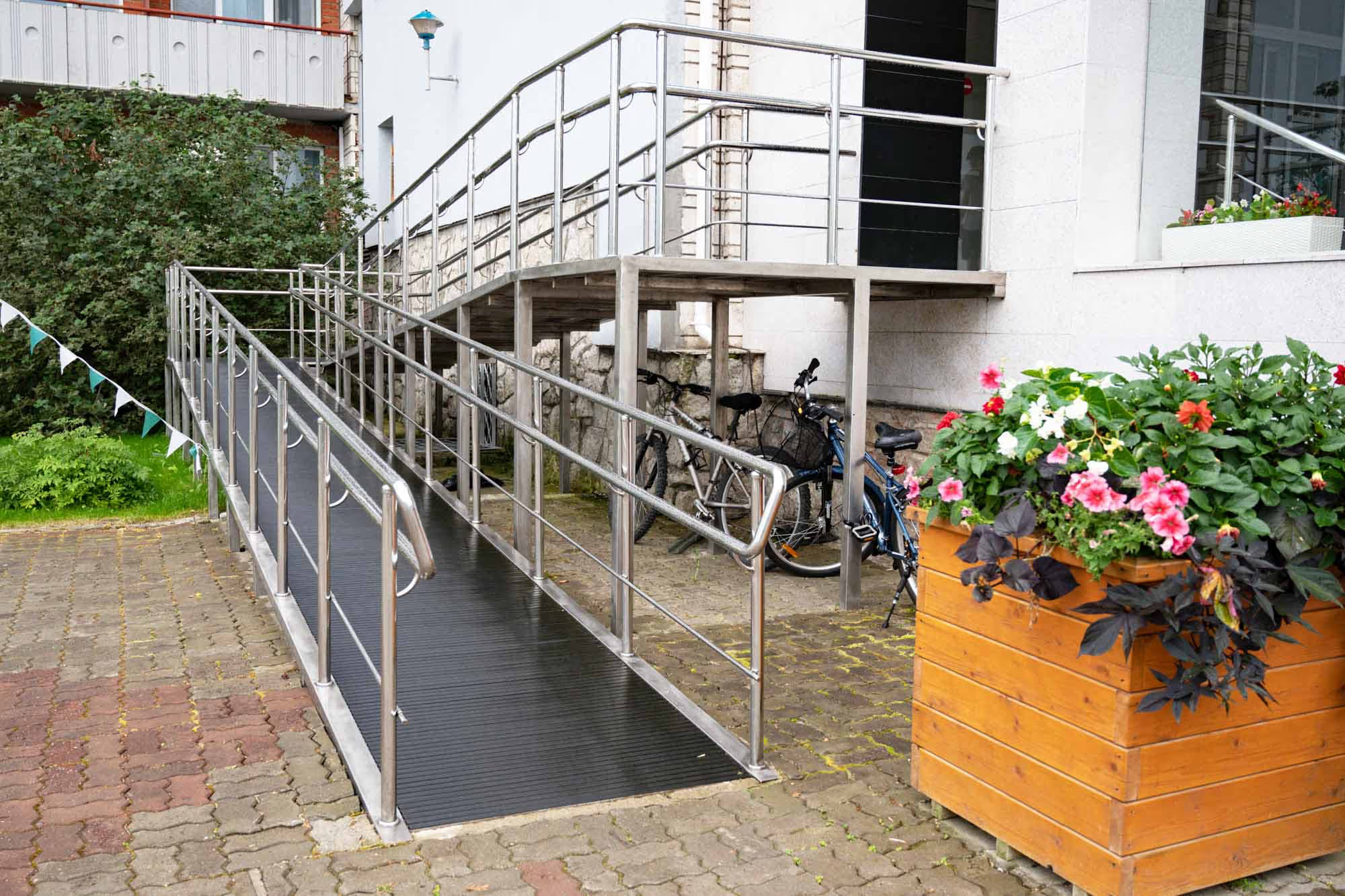
What to do: Consider installing a wheelchair ramp at your main entrance or a stairlift inside your home. If neither option works for your situation, moving essential living spaces to the main floor—including bedroom and bathroom—can eliminate the need to navigate stairs daily. Learn more about our wheelchair ramp installation services.
2. Your Bathroom Feels Like a Hazard Zone
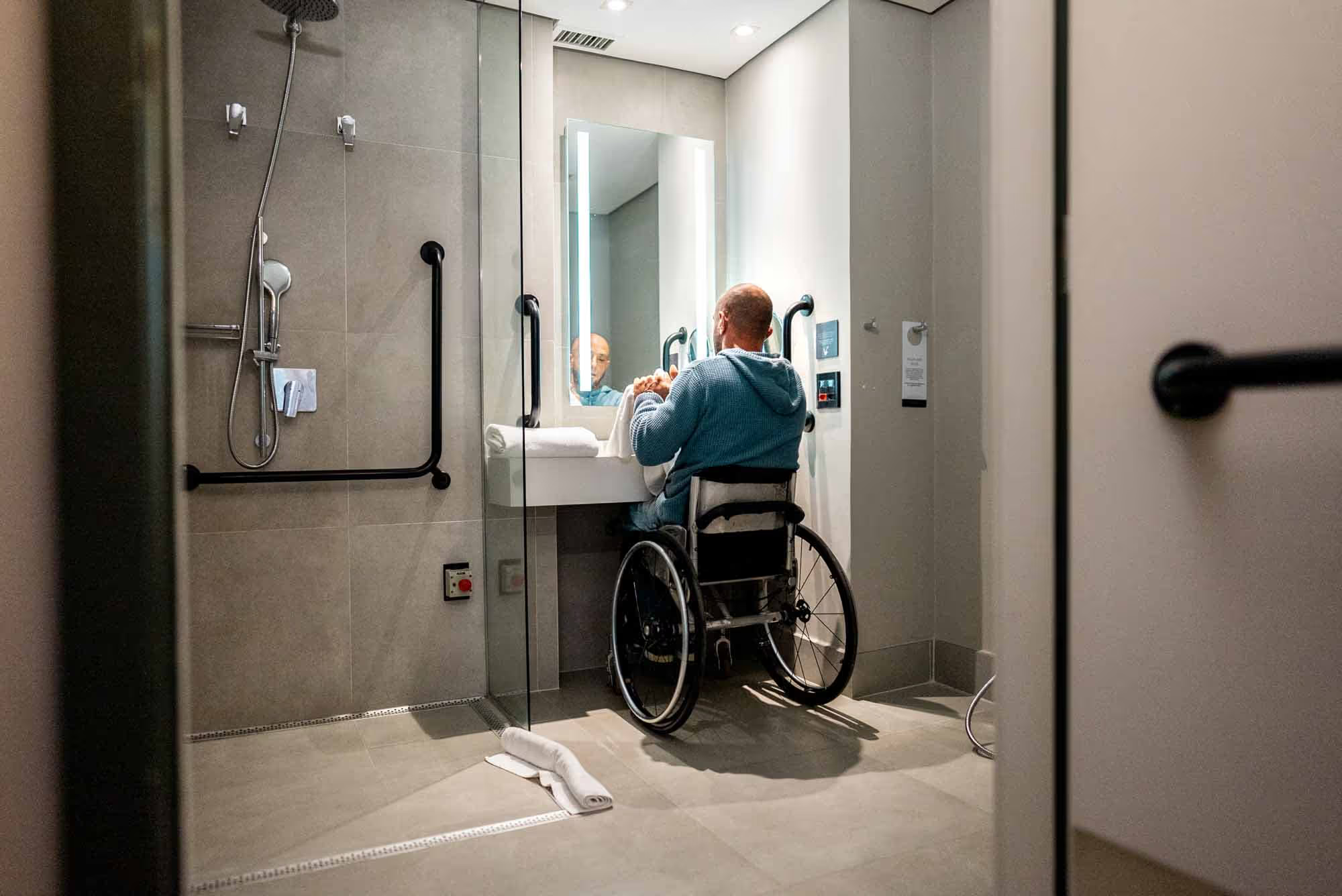
Bathrooms are inherently dangerous spaces. Slippery surfaces, hard edges, tight spaces, and the need to stand while wet create the perfect storm for accidents. If you're steadying yourself on towel bars (which aren't designed to hold body weight), avoiding showers because you're nervous about falling, or struggling to get in and out of the bathtub, you're not alone—and you're not safe.
The CDC reports that bathroom falls send approximately 234,000 people to emergency rooms each year.
The internal struggle: Every time you enter the bathroom, anxiety creeps in. You wonder if today will be the day you slip. That fear robs you of the dignity and confidence you deserve in your own home.
What to do: Tub-to-shower conversions with low or zero thresholds, grab bars properly anchored to wall studs, non-slip flooring, and walk-in tubs are proven solutions. These modifications don't have to look clinical—modern accessible bathrooms are beautiful and functional. Explore our accessible bathroom remodeling options.
3. Doorways and Hallways Feel Too Narrow
If you're using a walker, wheelchair, or mobility scooter and find yourself constantly maneuvering awkwardly through doorways or avoiding certain rooms entirely, your home's layout is limiting your freedom. Standard doorways are typically 30-32 inches wide, but wheelchairs and walkers need at least 36 inches for comfortable passage.
The internal struggle: You feel trapped in your own home. Rooms you once enjoyed are now off-limits. You may even feel like a burden when family members have to help you navigate your own space.
What to do: Door widening is a straightforward modification that makes an immediate difference in mobility and independence. Additionally, removing thresholds and installing lever-style door handles instead of knobs creates a more accessible environment throughout your home. Contact us about our door widening services.
4. You're Avoiding Parts of Your Home
Have you stopped going into the basement? Do you no longer use the upstairs bedroom? Are you sleeping in a recliner because you can't safely get to your bedroom?
When people start avoiding areas of their home, it's usually because those spaces have become physically inaccessible or feel unsafe. This isn't a sign of weakness—it's your instinct protecting you from danger.
The internal struggle: You feel a deep sense of loss. Your home, once a place of comfort and familiarity, now reminds you of what you can no longer do. That emotional toll is as real as the physical danger.
What to do: Comprehensive accessibility planning can help you reclaim your entire home. This might include bedroom and bathroom modifications on the main floor, stairlifts or platform lifts for multi-level access, or complete reconfigurations to make your home work for you again. Learn about our full range of accessibility remodeling services.
5. You've Already Had a Close Call (or an Actual Fall)
If you've already experienced a fall, a near-miss, or found yourself unable to get up without help, you're living with a ticking time bomb. Falls don't just cause physical injuries—they create a cycle of fear that leads to reduced activity, which leads to weaker muscles, which leads to more falls.
Research from the National Council on Aging shows that once an older adult falls, they're two to three times more likely to fall again.
The internal struggle: After a fall, fear becomes your constant companion. You second-guess every movement. The confidence you once had is replaced with anxiety about when—not if—it will happen again.
What to do: A complete home safety assessment can identify all potential hazards and create a prioritized plan for modifications. This might include multiple solutions working together: grab bars, improved lighting, non-slip surfaces, emergency call systems, and accessibility remodeling tailored to your specific mobility needs.
The Stakes Are Too High to Wait
Here's the philosophical truth that matters most: you deserve to feel safe, comfortable, and independent in your own home. Your house should support your life, not threaten it.
Waiting until after an injury isn't just risky—it's unnecessary. The modifications that will keep you safe are available right now. The expertise to install them correctly is available right now. The funding options, including Minnesota waivered services and VA grants, are available right now.
Your Next Step
At Remodel for Life, we specialize in helping Minnesota families transform homes from barriers into safe, accessible spaces that support independence and dignity. We've worked with hundreds of families facing these exact challenges, and we understand both the practical problems and the emotional weight you're carrying.
Here's how we can help:
- Schedule a free consultation where we'll assess your home's specific challenges
- Receive a detailed plan with prioritized recommendations and transparent pricing
- Experience professional installation with minimal disruption to your daily life
We serve families throughout the Twin Cities metro area, including White Bear Lake, Stillwater, Oakdale, Woodbury, and Minnetonka.
Don't wait for a fall to force your hand. Take control of your safety and independence today.
Schedule Your Free Home Safety Assessment or call (952) 297-2455.
You want to live independently in the home you love for as long as possible. But as you or your loved ones age or adapt to disability, your home can quietly transform from a safe haven into a place filled with hidden dangers.
The stairs that never bothered you before suddenly feel steeper. The bathroom that worked perfectly for decades now poses a real risk of falls. These aren't just inconveniences—they're warning signs that your home needs to change so you don't have to leave it.
The problem is, most families wait until after a fall or injury to make modifications. By then, fear has already taken hold, and independence has already been compromised.
Here are five critical warning signs that your home may not be safe for aging in place—and what you can do about each one.
1. Stairs Have Become a Daily Struggle
If you find yourself hesitating at the bottom of your stairs, gripping the handrail tightly, or avoiding the second floor altogether, that's your body telling you something important. Stairs are one of the leading causes of falls among older adults, with over one million stair-related injuries occurring annually according to the National Safety Council.
The internal struggle: You feel frustrated that something you've done thousands of times now feels dangerous. You may even feel embarrassed about needing help or anxious about losing your independence.
What to do: Consider installing a wheelchair ramp at your main entrance or a stairlift inside your home. If neither option works for your situation, moving essential living spaces to the main floor—including bedroom and bathroom—can eliminate the need to navigate stairs daily. Learn more about our wheelchair ramp installation services.
2. Your Bathroom Feels Like a Hazard Zone
Bathrooms are inherently dangerous spaces. Slippery surfaces, hard edges, tight spaces, and the need to stand while wet create the perfect storm for accidents. If you're steadying yourself on towel bars (which aren't designed to hold body weight), avoiding showers because you're nervous about falling, or struggling to get in and out of the bathtub, you're not alone—and you're not safe.
The CDC reports that bathroom falls send approximately 234,000 people to emergency rooms each year.
The internal struggle: Every time you enter the bathroom, anxiety creeps in. You wonder if today will be the day you slip. That fear robs you of the dignity and confidence you deserve in your own home.
What to do: Tub-to-shower conversions with low or zero thresholds, grab bars properly anchored to wall studs, non-slip flooring, and walk-in tubs are proven solutions. These modifications don't have to look clinical—modern accessible bathrooms are beautiful and functional. Explore our accessible bathroom remodeling options.
3. Doorways and Hallways Feel Too Narrow
If you're using a walker, wheelchair, or mobility scooter and find yourself constantly maneuvering awkwardly through doorways or avoiding certain rooms entirely, your home's layout is limiting your freedom. Standard doorways are typically 30-32 inches wide, but wheelchairs and walkers need at least 36 inches for comfortable passage.
The internal struggle: You feel trapped in your own home. Rooms you once enjoyed are now off-limits. You may even feel like a burden when family members have to help you navigate your own space.
What to do: Door widening is a straightforward modification that makes an immediate difference in mobility and independence. Additionally, removing thresholds and installing lever-style door handles instead of knobs creates a more accessible environment throughout your home. Contact us about our door widening services.
4. You're Avoiding Parts of Your Home
Have you stopped going into the basement? Do you no longer use the upstairs bedroom? Are you sleeping in a recliner because you can't safely get to your bedroom?
When people start avoiding areas of their home, it's usually because those spaces have become physically inaccessible or feel unsafe. This isn't a sign of weakness—it's your instinct protecting you from danger.
The internal struggle: You feel a deep sense of loss. Your home, once a place of comfort and familiarity, now reminds you of what you can no longer do. That emotional toll is as real as the physical danger.
What to do: Comprehensive accessibility planning can help you reclaim your entire home. This might include bedroom and bathroom modifications on the main floor, stairlifts or platform lifts for multi-level access, or complete reconfigurations to make your home work for you again. Learn about our full range of accessibility remodeling services.
5. You've Already Had a Close Call (or an Actual Fall)
If you've already experienced a fall, a near-miss, or found yourself unable to get up without help, you're living with a ticking time bomb. Falls don't just cause physical injuries—they create a cycle of fear that leads to reduced activity, which leads to weaker muscles, which leads to more falls.
Research from the National Council on Aging shows that once an older adult falls, they're two to three times more likely to fall again.
The internal struggle: After a fall, fear becomes your constant companion. You second-guess every movement. The confidence you once had is replaced with anxiety about when—not if—it will happen again.
What to do: A complete home safety assessment can identify all potential hazards and create a prioritized plan for modifications. This might include multiple solutions working together: grab bars, improved lighting, non-slip surfaces, emergency call systems, and accessibility remodeling tailored to your specific mobility needs.
The Stakes Are Too High to Wait
Here's the philosophical truth that matters most: you deserve to feel safe, comfortable, and independent in your own home. Your house should support your life, not threaten it.
Waiting until after an injury isn't just risky—it's unnecessary. The modifications that will keep you safe are available right now. The expertise to install them correctly is available right now. The funding options, including Minnesota waivered services and VA grants, are available right now.
Your Next Step
At Remodel for Life, we specialize in helping Minnesota families transform homes from barriers into safe, accessible spaces that support independence and dignity. We've worked with hundreds of families facing these exact challenges, and we understand both the practical problems and the emotional weight you're carrying.
Here's how we can help:
- Schedule a free consultation where we'll assess your home's specific challenges
- Receive a detailed plan with prioritized recommendations and transparent pricing
- Experience professional installation with minimal disruption to your daily life
We serve families throughout the Twin Cities metro area, including White Bear Lake, Stillwater, Oakdale, Woodbury, and Minnetonka.
Don't wait for a fall to force your hand. Take control of your safety and independence today.
Schedule Your Free Home Safety Assessment or call (952) 297-2455.
You want to live independently in the home you love for as long as possible. But as you or your loved ones age or adapt to disability, your home can quietly transform from a safe haven into a place filled with hidden dangers.
The stairs that never bothered you before suddenly feel steeper. The bathroom that worked perfectly for decades now poses a real risk of falls. These aren't just inconveniences—they're warning signs that your home needs to change so you don't have to leave it.
The problem is, most families wait until after a fall or injury to make modifications. By then, fear has already taken hold, and independence has already been compromised.
Here are five critical warning signs that your home may not be safe for aging in place—and what you can do about each one.
1. Stairs Have Become a Daily Struggle
If you find yourself hesitating at the bottom of your stairs, gripping the handrail tightly, or avoiding the second floor altogether, that's your body telling you something important. Stairs are one of the leading causes of falls among older adults, with over one million stair-related injuries occurring annually according to the National Safety Council.
The internal struggle: You feel frustrated that something you've done thousands of times now feels dangerous. You may even feel embarrassed about needing help or anxious about losing your independence.
What to do: Consider installing a wheelchair ramp at your main entrance or a stairlift inside your home. If neither option works for your situation, moving essential living spaces to the main floor—including bedroom and bathroom—can eliminate the need to navigate stairs daily. Learn more about our wheelchair ramp installation services.
2. Your Bathroom Feels Like a Hazard Zone
Bathrooms are inherently dangerous spaces. Slippery surfaces, hard edges, tight spaces, and the need to stand while wet create the perfect storm for accidents. If you're steadying yourself on towel bars (which aren't designed to hold body weight), avoiding showers because you're nervous about falling, or struggling to get in and out of the bathtub, you're not alone—and you're not safe.
The CDC reports that bathroom falls send approximately 234,000 people to emergency rooms each year.
The internal struggle: Every time you enter the bathroom, anxiety creeps in. You wonder if today will be the day you slip. That fear robs you of the dignity and confidence you deserve in your own home.
What to do: Tub-to-shower conversions with low or zero thresholds, grab bars properly anchored to wall studs, non-slip flooring, and walk-in tubs are proven solutions. These modifications don't have to look clinical—modern accessible bathrooms are beautiful and functional. Explore our accessible bathroom remodeling options.
3. Doorways and Hallways Feel Too Narrow
If you're using a walker, wheelchair, or mobility scooter and find yourself constantly maneuvering awkwardly through doorways or avoiding certain rooms entirely, your home's layout is limiting your freedom. Standard doorways are typically 30-32 inches wide, but wheelchairs and walkers need at least 36 inches for comfortable passage.
The internal struggle: You feel trapped in your own home. Rooms you once enjoyed are now off-limits. You may even feel like a burden when family members have to help you navigate your own space.
What to do: Door widening is a straightforward modification that makes an immediate difference in mobility and independence. Additionally, removing thresholds and installing lever-style door handles instead of knobs creates a more accessible environment throughout your home. Contact us about our door widening services.
4. You're Avoiding Parts of Your Home
Have you stopped going into the basement? Do you no longer use the upstairs bedroom? Are you sleeping in a recliner because you can't safely get to your bedroom?
When people start avoiding areas of their home, it's usually because those spaces have become physically inaccessible or feel unsafe. This isn't a sign of weakness—it's your instinct protecting you from danger.
The internal struggle: You feel a deep sense of loss. Your home, once a place of comfort and familiarity, now reminds you of what you can no longer do. That emotional toll is as real as the physical danger.
What to do: Comprehensive accessibility planning can help you reclaim your entire home. This might include bedroom and bathroom modifications on the main floor, stairlifts or platform lifts for multi-level access, or complete reconfigurations to make your home work for you again. Learn about our full range of accessibility remodeling services.
5. You've Already Had a Close Call (or an Actual Fall)
If you've already experienced a fall, a near-miss, or found yourself unable to get up without help, you're living with a ticking time bomb. Falls don't just cause physical injuries—they create a cycle of fear that leads to reduced activity, which leads to weaker muscles, which leads to more falls.
Research from the National Council on Aging shows that once an older adult falls, they're two to three times more likely to fall again.
The internal struggle: After a fall, fear becomes your constant companion. You second-guess every movement. The confidence you once had is replaced with anxiety about when—not if—it will happen again.
What to do: A complete home safety assessment can identify all potential hazards and create a prioritized plan for modifications. This might include multiple solutions working together: grab bars, improved lighting, non-slip surfaces, emergency call systems, and accessibility remodeling tailored to your specific mobility needs.
The Stakes Are Too High to Wait
Here's the philosophical truth that matters most: you deserve to feel safe, comfortable, and independent in your own home. Your house should support your life, not threaten it.
Waiting until after an injury isn't just risky—it's unnecessary. The modifications that will keep you safe are available right now. The expertise to install them correctly is available right now. The funding options, including Minnesota waivered services and VA grants, are available right now.
Your Next Step
At Remodel for Life, we specialize in helping Minnesota families transform homes from barriers into safe, accessible spaces that support independence and dignity. We've worked with hundreds of families facing these exact challenges, and we understand both the practical problems and the emotional weight you're carrying.
Here's how we can help:
- Schedule a free consultation where we'll assess your home's specific challenges
- Receive a detailed plan with prioritized recommendations and transparent pricing
- Experience professional installation with minimal disruption to your daily life
We serve families throughout the Twin Cities metro area, including White Bear Lake, Stillwater, Oakdale, Woodbury, and Minnetonka.
Don't wait for a fall to force your hand. Take control of your safety and independence today.
Schedule Your Free Home Safety Assessment or call (952) 297-2455.
You want to live independently in the home you love for as long as possible. But as you or your loved ones age or adapt to disability, your home can quietly transform from a safe haven into a place filled with hidden dangers.
The stairs that never bothered you before suddenly feel steeper. The bathroom that worked perfectly for decades now poses a real risk of falls. These aren't just inconveniences—they're warning signs that your home needs to change so you don't have to leave it.
The problem is, most families wait until after a fall or injury to make modifications. By then, fear has already taken hold, and independence has already been compromised.
Here are five critical warning signs that your home may not be safe for aging in place—and what you can do about each one.
1. Stairs Have Become a Daily Struggle
If you find yourself hesitating at the bottom of your stairs, gripping the handrail tightly, or avoiding the second floor altogether, that's your body telling you something important. Stairs are one of the leading causes of falls among older adults, with over one million stair-related injuries occurring annually according to the National Safety Council.
The internal struggle: You feel frustrated that something you've done thousands of times now feels dangerous. You may even feel embarrassed about needing help or anxious about losing your independence.
What to do: Consider installing a wheelchair ramp at your main entrance or a stairlift inside your home. If neither option works for your situation, moving essential living spaces to the main floor—including bedroom and bathroom—can eliminate the need to navigate stairs daily. Learn more about our wheelchair ramp installation services.
2. Your Bathroom Feels Like a Hazard Zone
Bathrooms are inherently dangerous spaces. Slippery surfaces, hard edges, tight spaces, and the need to stand while wet create the perfect storm for accidents. If you're steadying yourself on towel bars (which aren't designed to hold body weight), avoiding showers because you're nervous about falling, or struggling to get in and out of the bathtub, you're not alone—and you're not safe.
The CDC reports that bathroom falls send approximately 234,000 people to emergency rooms each year.
The internal struggle: Every time you enter the bathroom, anxiety creeps in. You wonder if today will be the day you slip. That fear robs you of the dignity and confidence you deserve in your own home.
What to do: Tub-to-shower conversions with low or zero thresholds, grab bars properly anchored to wall studs, non-slip flooring, and walk-in tubs are proven solutions. These modifications don't have to look clinical—modern accessible bathrooms are beautiful and functional. Explore our accessible bathroom remodeling options.
3. Doorways and Hallways Feel Too Narrow
If you're using a walker, wheelchair, or mobility scooter and find yourself constantly maneuvering awkwardly through doorways or avoiding certain rooms entirely, your home's layout is limiting your freedom. Standard doorways are typically 30-32 inches wide, but wheelchairs and walkers need at least 36 inches for comfortable passage.
The internal struggle: You feel trapped in your own home. Rooms you once enjoyed are now off-limits. You may even feel like a burden when family members have to help you navigate your own space.
What to do: Door widening is a straightforward modification that makes an immediate difference in mobility and independence. Additionally, removing thresholds and installing lever-style door handles instead of knobs creates a more accessible environment throughout your home. Contact us about our door widening services.
4. You're Avoiding Parts of Your Home
Have you stopped going into the basement? Do you no longer use the upstairs bedroom? Are you sleeping in a recliner because you can't safely get to your bedroom?
When people start avoiding areas of their home, it's usually because those spaces have become physically inaccessible or feel unsafe. This isn't a sign of weakness—it's your instinct protecting you from danger.
The internal struggle: You feel a deep sense of loss. Your home, once a place of comfort and familiarity, now reminds you of what you can no longer do. That emotional toll is as real as the physical danger.
What to do: Comprehensive accessibility planning can help you reclaim your entire home. This might include bedroom and bathroom modifications on the main floor, stairlifts or platform lifts for multi-level access, or complete reconfigurations to make your home work for you again. Learn about our full range of accessibility remodeling services.
5. You've Already Had a Close Call (or an Actual Fall)
If you've already experienced a fall, a near-miss, or found yourself unable to get up without help, you're living with a ticking time bomb. Falls don't just cause physical injuries—they create a cycle of fear that leads to reduced activity, which leads to weaker muscles, which leads to more falls.
Research from the National Council on Aging shows that once an older adult falls, they're two to three times more likely to fall again.
The internal struggle: After a fall, fear becomes your constant companion. You second-guess every movement. The confidence you once had is replaced with anxiety about when—not if—it will happen again.
What to do: A complete home safety assessment can identify all potential hazards and create a prioritized plan for modifications. This might include multiple solutions working together: grab bars, improved lighting, non-slip surfaces, emergency call systems, and accessibility remodeling tailored to your specific mobility needs.
The Stakes Are Too High to Wait
Here's the philosophical truth that matters most: you deserve to feel safe, comfortable, and independent in your own home. Your house should support your life, not threaten it.
Waiting until after an injury isn't just risky—it's unnecessary. The modifications that will keep you safe are available right now. The expertise to install them correctly is available right now. The funding options, including Minnesota waivered services and VA grants, are available right now.
Your Next Step
At Remodel for Life, we specialize in helping Minnesota families transform homes from barriers into safe, accessible spaces that support independence and dignity. We've worked with hundreds of families facing these exact challenges, and we understand both the practical problems and the emotional weight you're carrying.
Here's how we can help:
- Schedule a free consultation where we'll assess your home's specific challenges
- Receive a detailed plan with prioritized recommendations and transparent pricing
- Experience professional installation with minimal disruption to your daily life
We serve families throughout the Twin Cities metro area, including White Bear Lake, Stillwater, Oakdale, Woodbury, and Minnetonka.
Don't wait for a fall to force your hand. Take control of your safety and independence today.
Schedule Your Free Home Safety Assessment or call (952) 297-2455.
You want to live independently in the home you love for as long as possible. But as you or your loved ones age or adapt to disability, your home can quietly transform from a safe haven into a place filled with hidden dangers.
The stairs that never bothered you before suddenly feel steeper. The bathroom that worked perfectly for decades now poses a real risk of falls. These aren't just inconveniences—they're warning signs that your home needs to change so you don't have to leave it.
The problem is, most families wait until after a fall or injury to make modifications. By then, fear has already taken hold, and independence has already been compromised.
Here are five critical warning signs that your home may not be safe for aging in place—and what you can do about each one.
1. Stairs Have Become a Daily Struggle
If you find yourself hesitating at the bottom of your stairs, gripping the handrail tightly, or avoiding the second floor altogether, that's your body telling you something important. Stairs are one of the leading causes of falls among older adults, with over one million stair-related injuries occurring annually according to the National Safety Council.
The internal struggle: You feel frustrated that something you've done thousands of times now feels dangerous. You may even feel embarrassed about needing help or anxious about losing your independence.
What to do: Consider installing a wheelchair ramp at your main entrance or a stairlift inside your home. If neither option works for your situation, moving essential living spaces to the main floor—including bedroom and bathroom—can eliminate the need to navigate stairs daily. Learn more about our wheelchair ramp installation services.
2. Your Bathroom Feels Like a Hazard Zone
Bathrooms are inherently dangerous spaces. Slippery surfaces, hard edges, tight spaces, and the need to stand while wet create the perfect storm for accidents. If you're steadying yourself on towel bars (which aren't designed to hold body weight), avoiding showers because you're nervous about falling, or struggling to get in and out of the bathtub, you're not alone—and you're not safe.
The CDC reports that bathroom falls send approximately 234,000 people to emergency rooms each year.
The internal struggle: Every time you enter the bathroom, anxiety creeps in. You wonder if today will be the day you slip. That fear robs you of the dignity and confidence you deserve in your own home.
What to do: Tub-to-shower conversions with low or zero thresholds, grab bars properly anchored to wall studs, non-slip flooring, and walk-in tubs are proven solutions. These modifications don't have to look clinical—modern accessible bathrooms are beautiful and functional. Explore our accessible bathroom remodeling options.
3. Doorways and Hallways Feel Too Narrow
If you're using a walker, wheelchair, or mobility scooter and find yourself constantly maneuvering awkwardly through doorways or avoiding certain rooms entirely, your home's layout is limiting your freedom. Standard doorways are typically 30-32 inches wide, but wheelchairs and walkers need at least 36 inches for comfortable passage.
The internal struggle: You feel trapped in your own home. Rooms you once enjoyed are now off-limits. You may even feel like a burden when family members have to help you navigate your own space.
What to do: Door widening is a straightforward modification that makes an immediate difference in mobility and independence. Additionally, removing thresholds and installing lever-style door handles instead of knobs creates a more accessible environment throughout your home. Contact us about our door widening services.
4. You're Avoiding Parts of Your Home
Have you stopped going into the basement? Do you no longer use the upstairs bedroom? Are you sleeping in a recliner because you can't safely get to your bedroom?
When people start avoiding areas of their home, it's usually because those spaces have become physically inaccessible or feel unsafe. This isn't a sign of weakness—it's your instinct protecting you from danger.
The internal struggle: You feel a deep sense of loss. Your home, once a place of comfort and familiarity, now reminds you of what you can no longer do. That emotional toll is as real as the physical danger.
What to do: Comprehensive accessibility planning can help you reclaim your entire home. This might include bedroom and bathroom modifications on the main floor, stairlifts or platform lifts for multi-level access, or complete reconfigurations to make your home work for you again. Learn about our full range of accessibility remodeling services.
5. You've Already Had a Close Call (or an Actual Fall)
If you've already experienced a fall, a near-miss, or found yourself unable to get up without help, you're living with a ticking time bomb. Falls don't just cause physical injuries—they create a cycle of fear that leads to reduced activity, which leads to weaker muscles, which leads to more falls.
Research from the National Council on Aging shows that once an older adult falls, they're two to three times more likely to fall again.
The internal struggle: After a fall, fear becomes your constant companion. You second-guess every movement. The confidence you once had is replaced with anxiety about when—not if—it will happen again.
What to do: A complete home safety assessment can identify all potential hazards and create a prioritized plan for modifications. This might include multiple solutions working together: grab bars, improved lighting, non-slip surfaces, emergency call systems, and accessibility remodeling tailored to your specific mobility needs.
The Stakes Are Too High to Wait
Here's the philosophical truth that matters most: you deserve to feel safe, comfortable, and independent in your own home. Your house should support your life, not threaten it.
Waiting until after an injury isn't just risky—it's unnecessary. The modifications that will keep you safe are available right now. The expertise to install them correctly is available right now. The funding options, including Minnesota waivered services and VA grants, are available right now.
Your Next Step
At Remodel for Life, we specialize in helping Minnesota families transform homes from barriers into safe, accessible spaces that support independence and dignity. We've worked with hundreds of families facing these exact challenges, and we understand both the practical problems and the emotional weight you're carrying.
Here's how we can help:
- Schedule a free consultation where we'll assess your home's specific challenges
- Receive a detailed plan with prioritized recommendations and transparent pricing
- Experience professional installation with minimal disruption to your daily life
We serve families throughout the Twin Cities metro area, including White Bear Lake, Stillwater, Oakdale, Woodbury, and Minnetonka.
Don't wait for a fall to force your hand. Take control of your safety and independence today.
Schedule Your Free Home Safety Assessment or call (952) 297-2455.
Short heading goes here
Lorem ipsum dolor sit amet, consectetur adipiscing elit.