How to Stay Independent at Home: A Guide to Accessibility Modifications That Actually Work
How to Stay Independent at Home: A Guide to Accessibility Modifications That Actually Work

How to Stay Independent at Home: A Guide to Accessibility Modifications That Actually Work
How to Stay Independent at Home: A Guide to Accessibility Modifications That Actually Work
How to Stay Independent at Home: A Guide to Accessibility Modifications That Actually Work
You're the kind of person who values your independence. The thought of leaving your home for assisted living or becoming dependent on others for daily tasks isn't just unappealing—it feels wrong. You've built a life in your home, and you want to continue living it on your terms.
But here's what's standing in your way: your home wasn't designed for the mobility challenges you're facing now. What once felt comfortable and familiar has become difficult and sometimes dangerous.
The good news? Your home can adapt to you.
With the right accessibility modifications, you can stay independent, safe, and comfortable in the place you love. This guide will walk you through the modifications that actually work—not just in theory, but in real life for real people.
Why Home Modifications Matter More Than You Think
The difference between staying in your home and being forced to leave often comes down to a few critical modifications. According to the AARP, 87% of adults over 65 want to age in place, but only a fraction take proactive steps to make their homes safe and accessible.
The internal struggle you're facing: You don't want to admit you need help. You worry that modifications will make your home look institutional. You're concerned about cost. And beneath it all, there's the fear that if you start making changes, it means you're giving up something fundamental about who you are.
But here's the truth: Accessibility modifications aren't about giving up—they're about reclaiming your independence.
The Essential Accessibility Modifications That Change Lives
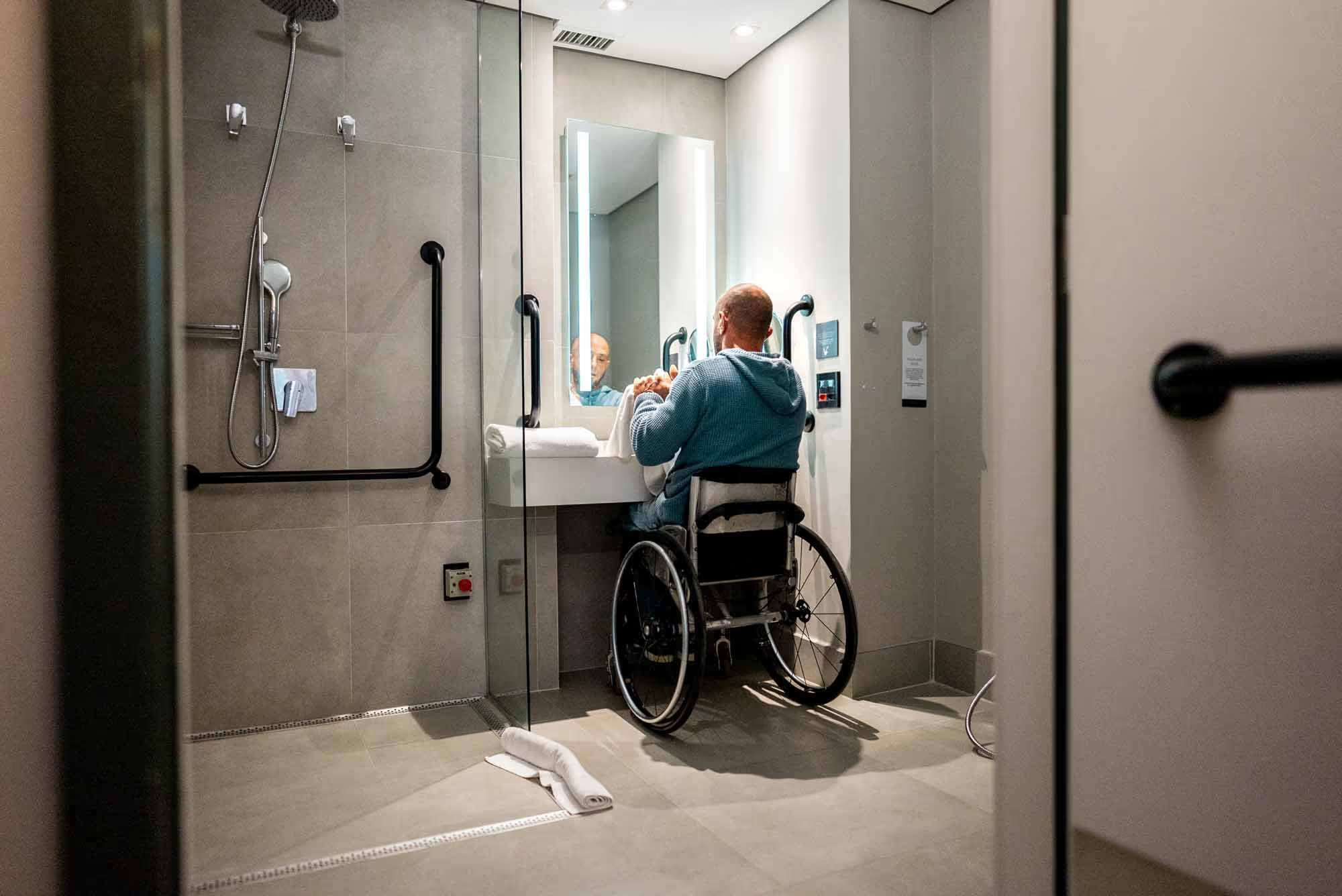
1. Bathroom Safety Modifications
Your bathroom is statistically the most dangerous room in your home. But it's also where some of the most effective modifications can be made.
Tub-to-Shower Conversions: Stepping over a high bathtub edge is one of the most common causes of bathroom falls. Converting your tub to a walk-in shower with a low or zero threshold eliminates this hazard entirely. Modern barrier-free showers don't sacrifice style for safety—they're beautiful, functional, and dramatically safer.
Walk-In Tubs: If you love baths but struggle with mobility, walk-in tubs with built-in seats and grab bars let you continue enjoying a relaxing soak without the dangerous climb.
Grab Bars (Properly Installed): This seems simple, but it's critical. Grab bars must be anchored into wall studs or blocking, not just drywall. Towel bars won't hold your weight in a fall—grab bars will. Strategic placement near toilets, in showers, and along bathtubs provides stability where you need it most.
Non-Slip Flooring: Wet tile is a fall waiting to happen. Non-slip flooring, textured surfaces, and proper drainage make your bathroom safer with every step.
Learn more about our accessible bathroom remodeling services.
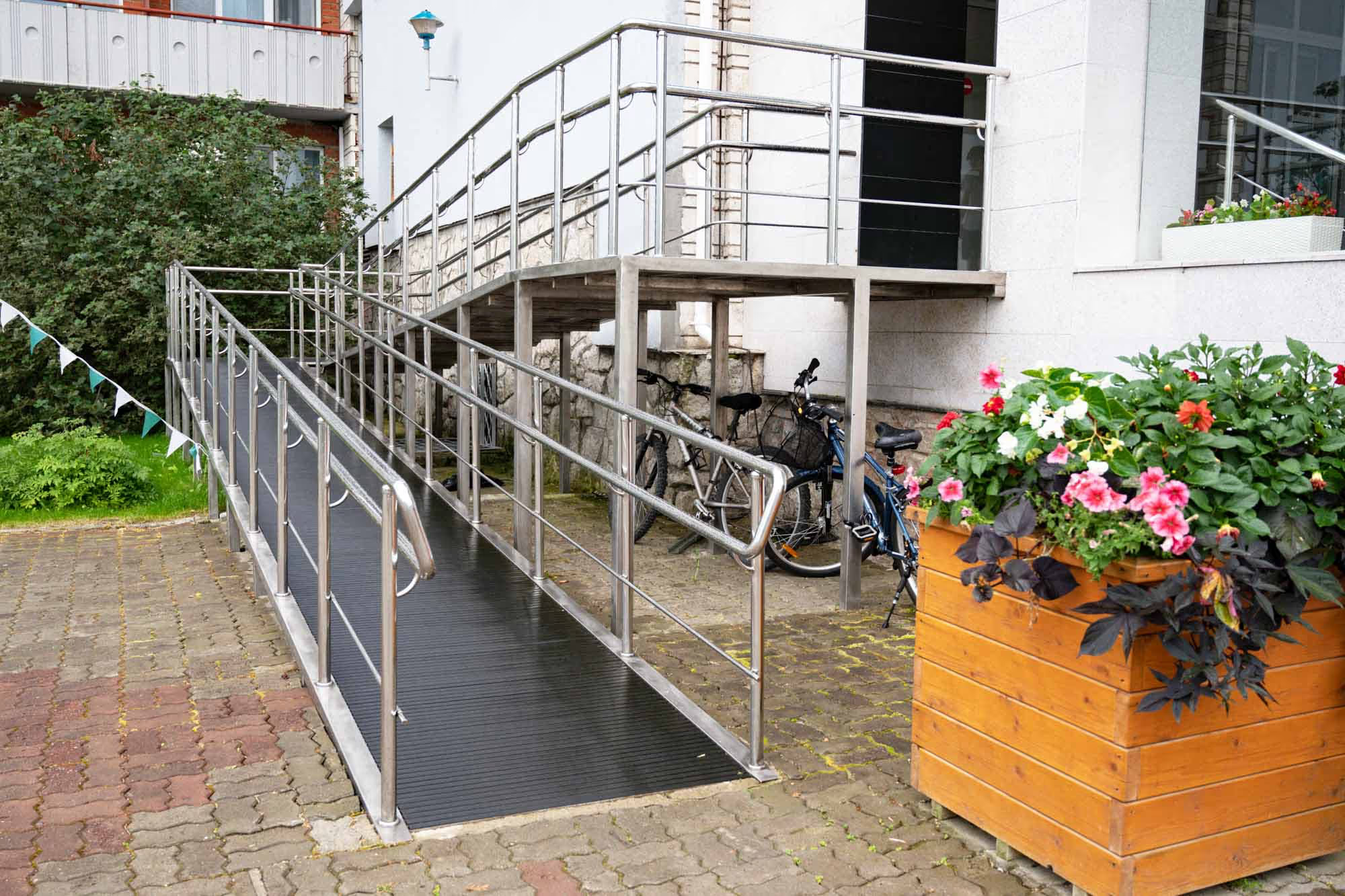
2. Wheelchair Ramps and Entry Solutions
Steps at your entrance shouldn't determine whether you can come and go freely from your own home.
Wheelchair Ramps: Properly designed ramps follow ADA guidelines with a 1:12 slope ratio (one inch of rise for every 12 inches of length), ensuring safe, comfortable access. We design ramps that blend with your home's architecture and can be constructed from durable materials that withstand Minnesota weather.
Threshold Ramps: Even small thresholds can be obstacles. Threshold ramps create smooth transitions between rooms and from indoors to outdoors.
Platform Lifts: For situations where ramps aren't practical due to space constraints or the height of the steps, platform lifts provide safe, reliable access.
The ability to enter and exit your home independently is fundamental to your freedom. Explore our wheelchair ramp solutions.
3. Door Widening and Accessibility
Standard doorways aren't designed for wheelchairs, walkers, or mobility scooters. At just 30-32 inches wide, they force you into awkward maneuvering that's exhausting and sometimes impossible.
Door Widening to 36+ Inches: This modification opens up your entire home. We can widen doorways throughout your house, creating seamless passage from room to room.
Lever Handles: Round doorknobs require grip strength and dexterity that many people lose with age or disability. Lever handles open with minimal effort and can be operated even with limited hand function.
Automatic Door Openers: For individuals with significant mobility limitations, automatic door openers provide true independence.
Check out our door widening services.
4. Kitchen Accessibility Modifications
Your kitchen should be a place of nourishment and independence, not frustration and limitation.
Lowered Countertops: Counter heights that accommodate wheelchair users or seated cooking allow you to prepare meals without strain.
Pull-Out Shelving: Reaching deep into cabinets becomes difficult with age or limited mobility. Pull-out shelves bring items to you.
Accessible Appliances: Side-opening ovens, raised dishwashers, and front-control cooktops make cooking safer and more accessible.
Task Lighting: Improved lighting reduces eye strain and makes food preparation safer.
Learn about our accessible kitchen remodeling.
5. Stairlifts and Elevation Solutions
If you have a multi-level home, stairs don't have to force you to abandon entire floors.
Stairlifts: These motorized chairs glide along a rail mounted to your staircase, safely transporting you between floors while requiring minimal physical effort.
Home Elevators: For comprehensive access or when multiple family members need mobility support, residential elevators provide safe passage between all levels.
Bedroom/Bathroom Relocation: Sometimes the most practical solution is bringing essential living spaces to the main floor, eliminating the need to navigate stairs daily.
Modifications That Preserve (and Even Enhance) Home Value
One of the biggest myths about accessibility modifications is that they'll hurt your home's resale value. The truth is quite different.
Universal design features appeal to a broad market. As the population ages, accessible homes are increasingly desirable. Features like curbless showers, wider doorways, and single-floor living are attractive to buyers across all age groups.
According to the National Association of Home Builders, homes with aging-in-place features are seeing increased demand, and modifications like roll-in showers and no-step entries are becoming standard expectations rather than specialized accommodations.
How to Pay for Accessibility Modifications
"This sounds expensive. Can I afford it?"
This is the worry that stops many families from moving forward. But there are more funding options than you might realize:
Minnesota Waivered Services
If you or a family member has a disability, Minnesota's Department of Human Services offers waivered services that can pay for home modifications. These waivers include:
- Elderly Waiver (EW): For seniors who need support to stay in their homes
- Community Alternative Care (CAC): For individuals who would otherwise need nursing home care
- Community Access for Disability Inclusion (CADI): For people with disabilities
- Brain Injury (BI) Waiver: For individuals with brain injuries
- Developmental Disabilities (DD) Waiver: For people with developmental disabilities
Remodel for Life is a licensed Minnesota Medicaid provider, which means we can work directly with your case manager to access these funding sources. Learn more about Minnesota waivered services.
VA Funding for Veterans
If you're a veteran, you may qualify for grants through the VA to modify your home. Programs like the Specially Adapted Housing (SAH) grant and the Home Improvements and Structural Alterations (HISA) grant can cover significant modification costs.
Discover your options with VA funding for home modifications.
Home Equity and Financing
Many families use home equity lines of credit (HELOCs), reverse mortgages, or personal financing to fund modifications. Some find that the cost of modifications is far less than the cost of assisted living—and preserves their independence and home equity.
Explore financing options for your accessibility project.
The Plan: Three Steps to an Accessible, Independent Life
You don't have to figure this out alone. Here's how Remodel for Life guides you through the process:
Step 1: Free Home Assessment
We visit your home to understand your specific mobility challenges, assess what modifications will make the biggest difference, and answer all your questions about costs, timeline, and funding options.
Step 2: Customized Plan & Transparent Pricing
You receive a detailed proposal outlining recommended modifications, materials, timeline, and costs. We help you prioritize based on safety, budget, and your goals for independence.
Step 3: Professional Installation
Our experienced crew completes your project with minimal disruption to your daily life. We treat your home with respect, communicate clearly throughout the process, and ensure every modification meets safety standards and your expectations.
Why Remodel for Life?
Specialized Expertise: We focus exclusively on accessibility remodeling. This isn't a side project for us—it's our entire business. We understand safety standards, ADA guidelines, and the real-world needs of people with mobility challenges.
Licensed & Trusted: We're a licensed Minnesota Medicaid provider, which means we meet strict standards for professionalism, quality, and ethics.
Personalized Approach: Your home and your needs are unique. We don't offer cookie-cutter solutions—we design modifications specifically for your life.
Transparent Communication: No surprises, no disappearing contractors. We're with you from consultation to completion.
Take the First Step Toward Independence Today
Your home doesn't have to be a barrier. With the right modifications, it can be the safest, most comfortable place for you to live independently for years to come.
You deserve dignity. You deserve independence. You deserve to stay in the home you love.
Let's make it happen.
Schedule Your Free Home Assessment or call (952) 297-2455.
We proudly serve families throughout the Twin Cities metro area, including Stillwater, Woodbury, Minnetonka, Lakeville, and surrounding communities.
You're the kind of person who values your independence. The thought of leaving your home for assisted living or becoming dependent on others for daily tasks isn't just unappealing—it feels wrong. You've built a life in your home, and you want to continue living it on your terms.
But here's what's standing in your way: your home wasn't designed for the mobility challenges you're facing now. What once felt comfortable and familiar has become difficult and sometimes dangerous.
The good news? Your home can adapt to you.
With the right accessibility modifications, you can stay independent, safe, and comfortable in the place you love. This guide will walk you through the modifications that actually work—not just in theory, but in real life for real people.
Why Home Modifications Matter More Than You Think
The difference between staying in your home and being forced to leave often comes down to a few critical modifications. According to the AARP, 87% of adults over 65 want to age in place, but only a fraction take proactive steps to make their homes safe and accessible.
The internal struggle you're facing: You don't want to admit you need help. You worry that modifications will make your home look institutional. You're concerned about cost. And beneath it all, there's the fear that if you start making changes, it means you're giving up something fundamental about who you are.
But here's the truth: Accessibility modifications aren't about giving up—they're about reclaiming your independence.
The Essential Accessibility Modifications That Change Lives
1. Bathroom Safety Modifications
Your bathroom is statistically the most dangerous room in your home. But it's also where some of the most effective modifications can be made.
Tub-to-Shower Conversions: Stepping over a high bathtub edge is one of the most common causes of bathroom falls. Converting your tub to a walk-in shower with a low or zero threshold eliminates this hazard entirely. Modern barrier-free showers don't sacrifice style for safety—they're beautiful, functional, and dramatically safer.
Walk-In Tubs: If you love baths but struggle with mobility, walk-in tubs with built-in seats and grab bars let you continue enjoying a relaxing soak without the dangerous climb.
Grab Bars (Properly Installed): This seems simple, but it's critical. Grab bars must be anchored into wall studs or blocking, not just drywall. Towel bars won't hold your weight in a fall—grab bars will. Strategic placement near toilets, in showers, and along bathtubs provides stability where you need it most.
Non-Slip Flooring: Wet tile is a fall waiting to happen. Non-slip flooring, textured surfaces, and proper drainage make your bathroom safer with every step.
Learn more about our accessible bathroom remodeling services.
2. Wheelchair Ramps and Entry Solutions
Steps at your entrance shouldn't determine whether you can come and go freely from your own home.
Wheelchair Ramps: Properly designed ramps follow ADA guidelines with a 1:12 slope ratio (one inch of rise for every 12 inches of length), ensuring safe, comfortable access. We design ramps that blend with your home's architecture and can be constructed from durable materials that withstand Minnesota weather.
Threshold Ramps: Even small thresholds can be obstacles. Threshold ramps create smooth transitions between rooms and from indoors to outdoors.
Platform Lifts: For situations where ramps aren't practical due to space constraints or the height of the steps, platform lifts provide safe, reliable access.
The ability to enter and exit your home independently is fundamental to your freedom. Explore our wheelchair ramp solutions.
3. Door Widening and Accessibility
Standard doorways aren't designed for wheelchairs, walkers, or mobility scooters. At just 30-32 inches wide, they force you into awkward maneuvering that's exhausting and sometimes impossible.
Door Widening to 36+ Inches: This modification opens up your entire home. We can widen doorways throughout your house, creating seamless passage from room to room.
Lever Handles: Round doorknobs require grip strength and dexterity that many people lose with age or disability. Lever handles open with minimal effort and can be operated even with limited hand function.
Automatic Door Openers: For individuals with significant mobility limitations, automatic door openers provide true independence.
Check out our door widening services.
4. Kitchen Accessibility Modifications
Your kitchen should be a place of nourishment and independence, not frustration and limitation.
Lowered Countertops: Counter heights that accommodate wheelchair users or seated cooking allow you to prepare meals without strain.
Pull-Out Shelving: Reaching deep into cabinets becomes difficult with age or limited mobility. Pull-out shelves bring items to you.
Accessible Appliances: Side-opening ovens, raised dishwashers, and front-control cooktops make cooking safer and more accessible.
Task Lighting: Improved lighting reduces eye strain and makes food preparation safer.
Learn about our accessible kitchen remodeling.
5. Stairlifts and Elevation Solutions
If you have a multi-level home, stairs don't have to force you to abandon entire floors.
Stairlifts: These motorized chairs glide along a rail mounted to your staircase, safely transporting you between floors while requiring minimal physical effort.
Home Elevators: For comprehensive access or when multiple family members need mobility support, residential elevators provide safe passage between all levels.
Bedroom/Bathroom Relocation: Sometimes the most practical solution is bringing essential living spaces to the main floor, eliminating the need to navigate stairs daily.
Modifications That Preserve (and Even Enhance) Home Value
One of the biggest myths about accessibility modifications is that they'll hurt your home's resale value. The truth is quite different.
Universal design features appeal to a broad market. As the population ages, accessible homes are increasingly desirable. Features like curbless showers, wider doorways, and single-floor living are attractive to buyers across all age groups.
According to the National Association of Home Builders, homes with aging-in-place features are seeing increased demand, and modifications like roll-in showers and no-step entries are becoming standard expectations rather than specialized accommodations.
How to Pay for Accessibility Modifications
"This sounds expensive. Can I afford it?"
This is the worry that stops many families from moving forward. But there are more funding options than you might realize:
Minnesota Waivered Services
If you or a family member has a disability, Minnesota's Department of Human Services offers waivered services that can pay for home modifications. These waivers include:
- Elderly Waiver (EW): For seniors who need support to stay in their homes
- Community Alternative Care (CAC): For individuals who would otherwise need nursing home care
- Community Access for Disability Inclusion (CADI): For people with disabilities
- Brain Injury (BI) Waiver: For individuals with brain injuries
- Developmental Disabilities (DD) Waiver: For people with developmental disabilities
Remodel for Life is a licensed Minnesota Medicaid provider, which means we can work directly with your case manager to access these funding sources. Learn more about Minnesota waivered services.
VA Funding for Veterans
If you're a veteran, you may qualify for grants through the VA to modify your home. Programs like the Specially Adapted Housing (SAH) grant and the Home Improvements and Structural Alterations (HISA) grant can cover significant modification costs.
Discover your options with VA funding for home modifications.
Home Equity and Financing
Many families use home equity lines of credit (HELOCs), reverse mortgages, or personal financing to fund modifications. Some find that the cost of modifications is far less than the cost of assisted living—and preserves their independence and home equity.
Explore financing options for your accessibility project.
The Plan: Three Steps to an Accessible, Independent Life
You don't have to figure this out alone. Here's how Remodel for Life guides you through the process:
Step 1: Free Home Assessment
We visit your home to understand your specific mobility challenges, assess what modifications will make the biggest difference, and answer all your questions about costs, timeline, and funding options.
Step 2: Customized Plan & Transparent Pricing
You receive a detailed proposal outlining recommended modifications, materials, timeline, and costs. We help you prioritize based on safety, budget, and your goals for independence.
Step 3: Professional Installation
Our experienced crew completes your project with minimal disruption to your daily life. We treat your home with respect, communicate clearly throughout the process, and ensure every modification meets safety standards and your expectations.
Why Remodel for Life?
Specialized Expertise: We focus exclusively on accessibility remodeling. This isn't a side project for us—it's our entire business. We understand safety standards, ADA guidelines, and the real-world needs of people with mobility challenges.
Licensed & Trusted: We're a licensed Minnesota Medicaid provider, which means we meet strict standards for professionalism, quality, and ethics.
Personalized Approach: Your home and your needs are unique. We don't offer cookie-cutter solutions—we design modifications specifically for your life.
Transparent Communication: No surprises, no disappearing contractors. We're with you from consultation to completion.
Take the First Step Toward Independence Today
Your home doesn't have to be a barrier. With the right modifications, it can be the safest, most comfortable place for you to live independently for years to come.
You deserve dignity. You deserve independence. You deserve to stay in the home you love.
Let's make it happen.
Schedule Your Free Home Assessment or call (952) 297-2455.
We proudly serve families throughout the Twin Cities metro area, including Stillwater, Woodbury, Minnetonka, Lakeville, and surrounding communities.
You're the kind of person who values your independence. The thought of leaving your home for assisted living or becoming dependent on others for daily tasks isn't just unappealing—it feels wrong. You've built a life in your home, and you want to continue living it on your terms.
But here's what's standing in your way: your home wasn't designed for the mobility challenges you're facing now. What once felt comfortable and familiar has become difficult and sometimes dangerous.
The good news? Your home can adapt to you.
With the right accessibility modifications, you can stay independent, safe, and comfortable in the place you love. This guide will walk you through the modifications that actually work—not just in theory, but in real life for real people.
Why Home Modifications Matter More Than You Think
The difference between staying in your home and being forced to leave often comes down to a few critical modifications. According to the AARP, 87% of adults over 65 want to age in place, but only a fraction take proactive steps to make their homes safe and accessible.
The internal struggle you're facing: You don't want to admit you need help. You worry that modifications will make your home look institutional. You're concerned about cost. And beneath it all, there's the fear that if you start making changes, it means you're giving up something fundamental about who you are.
But here's the truth: Accessibility modifications aren't about giving up—they're about reclaiming your independence.
The Essential Accessibility Modifications That Change Lives
1. Bathroom Safety Modifications
Your bathroom is statistically the most dangerous room in your home. But it's also where some of the most effective modifications can be made.
Tub-to-Shower Conversions: Stepping over a high bathtub edge is one of the most common causes of bathroom falls. Converting your tub to a walk-in shower with a low or zero threshold eliminates this hazard entirely. Modern barrier-free showers don't sacrifice style for safety—they're beautiful, functional, and dramatically safer.
Walk-In Tubs: If you love baths but struggle with mobility, walk-in tubs with built-in seats and grab bars let you continue enjoying a relaxing soak without the dangerous climb.
Grab Bars (Properly Installed): This seems simple, but it's critical. Grab bars must be anchored into wall studs or blocking, not just drywall. Towel bars won't hold your weight in a fall—grab bars will. Strategic placement near toilets, in showers, and along bathtubs provides stability where you need it most.
Non-Slip Flooring: Wet tile is a fall waiting to happen. Non-slip flooring, textured surfaces, and proper drainage make your bathroom safer with every step.
Learn more about our accessible bathroom remodeling services.
2. Wheelchair Ramps and Entry Solutions
Steps at your entrance shouldn't determine whether you can come and go freely from your own home.
Wheelchair Ramps: Properly designed ramps follow ADA guidelines with a 1:12 slope ratio (one inch of rise for every 12 inches of length), ensuring safe, comfortable access. We design ramps that blend with your home's architecture and can be constructed from durable materials that withstand Minnesota weather.
Threshold Ramps: Even small thresholds can be obstacles. Threshold ramps create smooth transitions between rooms and from indoors to outdoors.
Platform Lifts: For situations where ramps aren't practical due to space constraints or the height of the steps, platform lifts provide safe, reliable access.
The ability to enter and exit your home independently is fundamental to your freedom. Explore our wheelchair ramp solutions.
3. Door Widening and Accessibility
Standard doorways aren't designed for wheelchairs, walkers, or mobility scooters. At just 30-32 inches wide, they force you into awkward maneuvering that's exhausting and sometimes impossible.
Door Widening to 36+ Inches: This modification opens up your entire home. We can widen doorways throughout your house, creating seamless passage from room to room.
Lever Handles: Round doorknobs require grip strength and dexterity that many people lose with age or disability. Lever handles open with minimal effort and can be operated even with limited hand function.
Automatic Door Openers: For individuals with significant mobility limitations, automatic door openers provide true independence.
Check out our door widening services.
4. Kitchen Accessibility Modifications
Your kitchen should be a place of nourishment and independence, not frustration and limitation.
Lowered Countertops: Counter heights that accommodate wheelchair users or seated cooking allow you to prepare meals without strain.
Pull-Out Shelving: Reaching deep into cabinets becomes difficult with age or limited mobility. Pull-out shelves bring items to you.
Accessible Appliances: Side-opening ovens, raised dishwashers, and front-control cooktops make cooking safer and more accessible.
Task Lighting: Improved lighting reduces eye strain and makes food preparation safer.
Learn about our accessible kitchen remodeling.
5. Stairlifts and Elevation Solutions
If you have a multi-level home, stairs don't have to force you to abandon entire floors.
Stairlifts: These motorized chairs glide along a rail mounted to your staircase, safely transporting you between floors while requiring minimal physical effort.
Home Elevators: For comprehensive access or when multiple family members need mobility support, residential elevators provide safe passage between all levels.
Bedroom/Bathroom Relocation: Sometimes the most practical solution is bringing essential living spaces to the main floor, eliminating the need to navigate stairs daily.
Modifications That Preserve (and Even Enhance) Home Value
One of the biggest myths about accessibility modifications is that they'll hurt your home's resale value. The truth is quite different.
Universal design features appeal to a broad market. As the population ages, accessible homes are increasingly desirable. Features like curbless showers, wider doorways, and single-floor living are attractive to buyers across all age groups.
According to the National Association of Home Builders, homes with aging-in-place features are seeing increased demand, and modifications like roll-in showers and no-step entries are becoming standard expectations rather than specialized accommodations.
How to Pay for Accessibility Modifications
"This sounds expensive. Can I afford it?"
This is the worry that stops many families from moving forward. But there are more funding options than you might realize:
Minnesota Waivered Services
If you or a family member has a disability, Minnesota's Department of Human Services offers waivered services that can pay for home modifications. These waivers include:
- Elderly Waiver (EW): For seniors who need support to stay in their homes
- Community Alternative Care (CAC): For individuals who would otherwise need nursing home care
- Community Access for Disability Inclusion (CADI): For people with disabilities
- Brain Injury (BI) Waiver: For individuals with brain injuries
- Developmental Disabilities (DD) Waiver: For people with developmental disabilities
Remodel for Life is a licensed Minnesota Medicaid provider, which means we can work directly with your case manager to access these funding sources. Learn more about Minnesota waivered services.
VA Funding for Veterans
If you're a veteran, you may qualify for grants through the VA to modify your home. Programs like the Specially Adapted Housing (SAH) grant and the Home Improvements and Structural Alterations (HISA) grant can cover significant modification costs.
Discover your options with VA funding for home modifications.
Home Equity and Financing
Many families use home equity lines of credit (HELOCs), reverse mortgages, or personal financing to fund modifications. Some find that the cost of modifications is far less than the cost of assisted living—and preserves their independence and home equity.
Explore financing options for your accessibility project.
The Plan: Three Steps to an Accessible, Independent Life
You don't have to figure this out alone. Here's how Remodel for Life guides you through the process:
Step 1: Free Home Assessment
We visit your home to understand your specific mobility challenges, assess what modifications will make the biggest difference, and answer all your questions about costs, timeline, and funding options.
Step 2: Customized Plan & Transparent Pricing
You receive a detailed proposal outlining recommended modifications, materials, timeline, and costs. We help you prioritize based on safety, budget, and your goals for independence.
Step 3: Professional Installation
Our experienced crew completes your project with minimal disruption to your daily life. We treat your home with respect, communicate clearly throughout the process, and ensure every modification meets safety standards and your expectations.
Why Remodel for Life?
Specialized Expertise: We focus exclusively on accessibility remodeling. This isn't a side project for us—it's our entire business. We understand safety standards, ADA guidelines, and the real-world needs of people with mobility challenges.
Licensed & Trusted: We're a licensed Minnesota Medicaid provider, which means we meet strict standards for professionalism, quality, and ethics.
Personalized Approach: Your home and your needs are unique. We don't offer cookie-cutter solutions—we design modifications specifically for your life.
Transparent Communication: No surprises, no disappearing contractors. We're with you from consultation to completion.
Take the First Step Toward Independence Today
Your home doesn't have to be a barrier. With the right modifications, it can be the safest, most comfortable place for you to live independently for years to come.
You deserve dignity. You deserve independence. You deserve to stay in the home you love.
Let's make it happen.
Schedule Your Free Home Assessment or call (952) 297-2455.
We proudly serve families throughout the Twin Cities metro area, including Stillwater, Woodbury, Minnetonka, Lakeville, and surrounding communities.
You're the kind of person who values your independence. The thought of leaving your home for assisted living or becoming dependent on others for daily tasks isn't just unappealing—it feels wrong. You've built a life in your home, and you want to continue living it on your terms.
But here's what's standing in your way: your home wasn't designed for the mobility challenges you're facing now. What once felt comfortable and familiar has become difficult and sometimes dangerous.
The good news? Your home can adapt to you.
With the right accessibility modifications, you can stay independent, safe, and comfortable in the place you love. This guide will walk you through the modifications that actually work—not just in theory, but in real life for real people.
Why Home Modifications Matter More Than You Think
The difference between staying in your home and being forced to leave often comes down to a few critical modifications. According to the AARP, 87% of adults over 65 want to age in place, but only a fraction take proactive steps to make their homes safe and accessible.
The internal struggle you're facing: You don't want to admit you need help. You worry that modifications will make your home look institutional. You're concerned about cost. And beneath it all, there's the fear that if you start making changes, it means you're giving up something fundamental about who you are.
But here's the truth: Accessibility modifications aren't about giving up—they're about reclaiming your independence.
The Essential Accessibility Modifications That Change Lives
1. Bathroom Safety Modifications
Your bathroom is statistically the most dangerous room in your home. But it's also where some of the most effective modifications can be made.
Tub-to-Shower Conversions: Stepping over a high bathtub edge is one of the most common causes of bathroom falls. Converting your tub to a walk-in shower with a low or zero threshold eliminates this hazard entirely. Modern barrier-free showers don't sacrifice style for safety—they're beautiful, functional, and dramatically safer.
Walk-In Tubs: If you love baths but struggle with mobility, walk-in tubs with built-in seats and grab bars let you continue enjoying a relaxing soak without the dangerous climb.
Grab Bars (Properly Installed): This seems simple, but it's critical. Grab bars must be anchored into wall studs or blocking, not just drywall. Towel bars won't hold your weight in a fall—grab bars will. Strategic placement near toilets, in showers, and along bathtubs provides stability where you need it most.
Non-Slip Flooring: Wet tile is a fall waiting to happen. Non-slip flooring, textured surfaces, and proper drainage make your bathroom safer with every step.
Learn more about our accessible bathroom remodeling services.
2. Wheelchair Ramps and Entry Solutions
Steps at your entrance shouldn't determine whether you can come and go freely from your own home.
Wheelchair Ramps: Properly designed ramps follow ADA guidelines with a 1:12 slope ratio (one inch of rise for every 12 inches of length), ensuring safe, comfortable access. We design ramps that blend with your home's architecture and can be constructed from durable materials that withstand Minnesota weather.
Threshold Ramps: Even small thresholds can be obstacles. Threshold ramps create smooth transitions between rooms and from indoors to outdoors.
Platform Lifts: For situations where ramps aren't practical due to space constraints or the height of the steps, platform lifts provide safe, reliable access.
The ability to enter and exit your home independently is fundamental to your freedom. Explore our wheelchair ramp solutions.
3. Door Widening and Accessibility
Standard doorways aren't designed for wheelchairs, walkers, or mobility scooters. At just 30-32 inches wide, they force you into awkward maneuvering that's exhausting and sometimes impossible.
Door Widening to 36+ Inches: This modification opens up your entire home. We can widen doorways throughout your house, creating seamless passage from room to room.
Lever Handles: Round doorknobs require grip strength and dexterity that many people lose with age or disability. Lever handles open with minimal effort and can be operated even with limited hand function.
Automatic Door Openers: For individuals with significant mobility limitations, automatic door openers provide true independence.
Check out our door widening services.
4. Kitchen Accessibility Modifications
Your kitchen should be a place of nourishment and independence, not frustration and limitation.
Lowered Countertops: Counter heights that accommodate wheelchair users or seated cooking allow you to prepare meals without strain.
Pull-Out Shelving: Reaching deep into cabinets becomes difficult with age or limited mobility. Pull-out shelves bring items to you.
Accessible Appliances: Side-opening ovens, raised dishwashers, and front-control cooktops make cooking safer and more accessible.
Task Lighting: Improved lighting reduces eye strain and makes food preparation safer.
Learn about our accessible kitchen remodeling.
5. Stairlifts and Elevation Solutions
If you have a multi-level home, stairs don't have to force you to abandon entire floors.
Stairlifts: These motorized chairs glide along a rail mounted to your staircase, safely transporting you between floors while requiring minimal physical effort.
Home Elevators: For comprehensive access or when multiple family members need mobility support, residential elevators provide safe passage between all levels.
Bedroom/Bathroom Relocation: Sometimes the most practical solution is bringing essential living spaces to the main floor, eliminating the need to navigate stairs daily.
Modifications That Preserve (and Even Enhance) Home Value
One of the biggest myths about accessibility modifications is that they'll hurt your home's resale value. The truth is quite different.
Universal design features appeal to a broad market. As the population ages, accessible homes are increasingly desirable. Features like curbless showers, wider doorways, and single-floor living are attractive to buyers across all age groups.
According to the National Association of Home Builders, homes with aging-in-place features are seeing increased demand, and modifications like roll-in showers and no-step entries are becoming standard expectations rather than specialized accommodations.
How to Pay for Accessibility Modifications
"This sounds expensive. Can I afford it?"
This is the worry that stops many families from moving forward. But there are more funding options than you might realize:
Minnesota Waivered Services
If you or a family member has a disability, Minnesota's Department of Human Services offers waivered services that can pay for home modifications. These waivers include:
- Elderly Waiver (EW): For seniors who need support to stay in their homes
- Community Alternative Care (CAC): For individuals who would otherwise need nursing home care
- Community Access for Disability Inclusion (CADI): For people with disabilities
- Brain Injury (BI) Waiver: For individuals with brain injuries
- Developmental Disabilities (DD) Waiver: For people with developmental disabilities
Remodel for Life is a licensed Minnesota Medicaid provider, which means we can work directly with your case manager to access these funding sources. Learn more about Minnesota waivered services.
VA Funding for Veterans
If you're a veteran, you may qualify for grants through the VA to modify your home. Programs like the Specially Adapted Housing (SAH) grant and the Home Improvements and Structural Alterations (HISA) grant can cover significant modification costs.
Discover your options with VA funding for home modifications.
Home Equity and Financing
Many families use home equity lines of credit (HELOCs), reverse mortgages, or personal financing to fund modifications. Some find that the cost of modifications is far less than the cost of assisted living—and preserves their independence and home equity.
Explore financing options for your accessibility project.
The Plan: Three Steps to an Accessible, Independent Life
You don't have to figure this out alone. Here's how Remodel for Life guides you through the process:
Step 1: Free Home Assessment
We visit your home to understand your specific mobility challenges, assess what modifications will make the biggest difference, and answer all your questions about costs, timeline, and funding options.
Step 2: Customized Plan & Transparent Pricing
You receive a detailed proposal outlining recommended modifications, materials, timeline, and costs. We help you prioritize based on safety, budget, and your goals for independence.
Step 3: Professional Installation
Our experienced crew completes your project with minimal disruption to your daily life. We treat your home with respect, communicate clearly throughout the process, and ensure every modification meets safety standards and your expectations.
Why Remodel for Life?
Specialized Expertise: We focus exclusively on accessibility remodeling. This isn't a side project for us—it's our entire business. We understand safety standards, ADA guidelines, and the real-world needs of people with mobility challenges.
Licensed & Trusted: We're a licensed Minnesota Medicaid provider, which means we meet strict standards for professionalism, quality, and ethics.
Personalized Approach: Your home and your needs are unique. We don't offer cookie-cutter solutions—we design modifications specifically for your life.
Transparent Communication: No surprises, no disappearing contractors. We're with you from consultation to completion.
Take the First Step Toward Independence Today
Your home doesn't have to be a barrier. With the right modifications, it can be the safest, most comfortable place for you to live independently for years to come.
You deserve dignity. You deserve independence. You deserve to stay in the home you love.
Let's make it happen.
Schedule Your Free Home Assessment or call (952) 297-2455.
We proudly serve families throughout the Twin Cities metro area, including Stillwater, Woodbury, Minnetonka, Lakeville, and surrounding communities.
You're the kind of person who values your independence. The thought of leaving your home for assisted living or becoming dependent on others for daily tasks isn't just unappealing—it feels wrong. You've built a life in your home, and you want to continue living it on your terms.
But here's what's standing in your way: your home wasn't designed for the mobility challenges you're facing now. What once felt comfortable and familiar has become difficult and sometimes dangerous.
The good news? Your home can adapt to you.
With the right accessibility modifications, you can stay independent, safe, and comfortable in the place you love. This guide will walk you through the modifications that actually work—not just in theory, but in real life for real people.
Why Home Modifications Matter More Than You Think
The difference between staying in your home and being forced to leave often comes down to a few critical modifications. According to the AARP, 87% of adults over 65 want to age in place, but only a fraction take proactive steps to make their homes safe and accessible.
The internal struggle you're facing: You don't want to admit you need help. You worry that modifications will make your home look institutional. You're concerned about cost. And beneath it all, there's the fear that if you start making changes, it means you're giving up something fundamental about who you are.
But here's the truth: Accessibility modifications aren't about giving up—they're about reclaiming your independence.
The Essential Accessibility Modifications That Change Lives
1. Bathroom Safety Modifications
Your bathroom is statistically the most dangerous room in your home. But it's also where some of the most effective modifications can be made.
Tub-to-Shower Conversions: Stepping over a high bathtub edge is one of the most common causes of bathroom falls. Converting your tub to a walk-in shower with a low or zero threshold eliminates this hazard entirely. Modern barrier-free showers don't sacrifice style for safety—they're beautiful, functional, and dramatically safer.
Walk-In Tubs: If you love baths but struggle with mobility, walk-in tubs with built-in seats and grab bars let you continue enjoying a relaxing soak without the dangerous climb.
Grab Bars (Properly Installed): This seems simple, but it's critical. Grab bars must be anchored into wall studs or blocking, not just drywall. Towel bars won't hold your weight in a fall—grab bars will. Strategic placement near toilets, in showers, and along bathtubs provides stability where you need it most.
Non-Slip Flooring: Wet tile is a fall waiting to happen. Non-slip flooring, textured surfaces, and proper drainage make your bathroom safer with every step.
Learn more about our accessible bathroom remodeling services.
2. Wheelchair Ramps and Entry Solutions
Steps at your entrance shouldn't determine whether you can come and go freely from your own home.
Wheelchair Ramps: Properly designed ramps follow ADA guidelines with a 1:12 slope ratio (one inch of rise for every 12 inches of length), ensuring safe, comfortable access. We design ramps that blend with your home's architecture and can be constructed from durable materials that withstand Minnesota weather.
Threshold Ramps: Even small thresholds can be obstacles. Threshold ramps create smooth transitions between rooms and from indoors to outdoors.
Platform Lifts: For situations where ramps aren't practical due to space constraints or the height of the steps, platform lifts provide safe, reliable access.
The ability to enter and exit your home independently is fundamental to your freedom. Explore our wheelchair ramp solutions.
3. Door Widening and Accessibility
Standard doorways aren't designed for wheelchairs, walkers, or mobility scooters. At just 30-32 inches wide, they force you into awkward maneuvering that's exhausting and sometimes impossible.
Door Widening to 36+ Inches: This modification opens up your entire home. We can widen doorways throughout your house, creating seamless passage from room to room.
Lever Handles: Round doorknobs require grip strength and dexterity that many people lose with age or disability. Lever handles open with minimal effort and can be operated even with limited hand function.
Automatic Door Openers: For individuals with significant mobility limitations, automatic door openers provide true independence.
Check out our door widening services.
4. Kitchen Accessibility Modifications
Your kitchen should be a place of nourishment and independence, not frustration and limitation.
Lowered Countertops: Counter heights that accommodate wheelchair users or seated cooking allow you to prepare meals without strain.
Pull-Out Shelving: Reaching deep into cabinets becomes difficult with age or limited mobility. Pull-out shelves bring items to you.
Accessible Appliances: Side-opening ovens, raised dishwashers, and front-control cooktops make cooking safer and more accessible.
Task Lighting: Improved lighting reduces eye strain and makes food preparation safer.
Learn about our accessible kitchen remodeling.
5. Stairlifts and Elevation Solutions
If you have a multi-level home, stairs don't have to force you to abandon entire floors.
Stairlifts: These motorized chairs glide along a rail mounted to your staircase, safely transporting you between floors while requiring minimal physical effort.
Home Elevators: For comprehensive access or when multiple family members need mobility support, residential elevators provide safe passage between all levels.
Bedroom/Bathroom Relocation: Sometimes the most practical solution is bringing essential living spaces to the main floor, eliminating the need to navigate stairs daily.
Modifications That Preserve (and Even Enhance) Home Value
One of the biggest myths about accessibility modifications is that they'll hurt your home's resale value. The truth is quite different.
Universal design features appeal to a broad market. As the population ages, accessible homes are increasingly desirable. Features like curbless showers, wider doorways, and single-floor living are attractive to buyers across all age groups.
According to the National Association of Home Builders, homes with aging-in-place features are seeing increased demand, and modifications like roll-in showers and no-step entries are becoming standard expectations rather than specialized accommodations.
How to Pay for Accessibility Modifications
"This sounds expensive. Can I afford it?"
This is the worry that stops many families from moving forward. But there are more funding options than you might realize:
Minnesota Waivered Services
If you or a family member has a disability, Minnesota's Department of Human Services offers waivered services that can pay for home modifications. These waivers include:
- Elderly Waiver (EW): For seniors who need support to stay in their homes
- Community Alternative Care (CAC): For individuals who would otherwise need nursing home care
- Community Access for Disability Inclusion (CADI): For people with disabilities
- Brain Injury (BI) Waiver: For individuals with brain injuries
- Developmental Disabilities (DD) Waiver: For people with developmental disabilities
Remodel for Life is a licensed Minnesota Medicaid provider, which means we can work directly with your case manager to access these funding sources. Learn more about Minnesota waivered services.
VA Funding for Veterans
If you're a veteran, you may qualify for grants through the VA to modify your home. Programs like the Specially Adapted Housing (SAH) grant and the Home Improvements and Structural Alterations (HISA) grant can cover significant modification costs.
Discover your options with VA funding for home modifications.
Home Equity and Financing
Many families use home equity lines of credit (HELOCs), reverse mortgages, or personal financing to fund modifications. Some find that the cost of modifications is far less than the cost of assisted living—and preserves their independence and home equity.
Explore financing options for your accessibility project.
The Plan: Three Steps to an Accessible, Independent Life
You don't have to figure this out alone. Here's how Remodel for Life guides you through the process:
Step 1: Free Home Assessment
We visit your home to understand your specific mobility challenges, assess what modifications will make the biggest difference, and answer all your questions about costs, timeline, and funding options.
Step 2: Customized Plan & Transparent Pricing
You receive a detailed proposal outlining recommended modifications, materials, timeline, and costs. We help you prioritize based on safety, budget, and your goals for independence.
Step 3: Professional Installation
Our experienced crew completes your project with minimal disruption to your daily life. We treat your home with respect, communicate clearly throughout the process, and ensure every modification meets safety standards and your expectations.
Why Remodel for Life?
Specialized Expertise: We focus exclusively on accessibility remodeling. This isn't a side project for us—it's our entire business. We understand safety standards, ADA guidelines, and the real-world needs of people with mobility challenges.
Licensed & Trusted: We're a licensed Minnesota Medicaid provider, which means we meet strict standards for professionalism, quality, and ethics.
Personalized Approach: Your home and your needs are unique. We don't offer cookie-cutter solutions—we design modifications specifically for your life.
Transparent Communication: No surprises, no disappearing contractors. We're with you from consultation to completion.
Take the First Step Toward Independence Today
Your home doesn't have to be a barrier. With the right modifications, it can be the safest, most comfortable place for you to live independently for years to come.
You deserve dignity. You deserve independence. You deserve to stay in the home you love.
Let's make it happen.
Schedule Your Free Home Assessment or call (952) 297-2455.
We proudly serve families throughout the Twin Cities metro area, including Stillwater, Woodbury, Minnetonka, Lakeville, and surrounding communities.
Short heading goes here
Lorem ipsum dolor sit amet, consectetur adipiscing elit.